I have been a writer all my life and recently started blogging. I have published two books. My latest book is a coming-of-age novel entitled Mickey Mantle's Last Home Run which follows the exploits of a fifteen-year-old playing baseball back in 1968. It is a book about the friendship of a black kid and a white kid trying to navigate teenage life in that tumultuous time when our country seemed to be coming apart.
My first book, Grandpa Gordy’s Greatest World Series Games, is geared to middle-grade readers. In it, Grandpa Gordy, a retired sportswriter, relates his versions of the great games of our national pastime in a hilarious and entertaining fashion.
My love of baseball shows through in my books as I try to convey many of life’s lessons in an enjoyable lighthearted way.
I grew up writing and playing baseball in the New Jersey suburbs of New York City. I majored in English at Montclair State University where I studied Steinbeck, Dylan, and Berra.
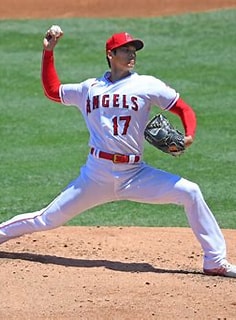
On Thursday night Shohei Ohtani had an historic performance on the mound and at the plate by pitching a shutout and hitting two home runs on the same day.
My friend Al Zevin, who is an amateur baseball historian, did some research and discovered that the remarkable feat occurred only four other times in modern baseball history.
2023 Shohei Ohtani vs. Detroit
1971 Sonny Siebert vs. Boston
1971 Rick Wise vs. Cincinnati
1962 Pedro Ramos vs. Baltimore
1961 Milt Pappas vs. Minnesota
As a big Ohtani fan, I then boastfully claimed to Al that Ohtani has probably hit more home runs this year than those four pitchers combined for their entire careers.
I did some research and well…I was wrong.
Here’s what I found. All four pitchers, Siebert, Wise, Ramos and Pappas are what we might have called good hitting pitchers in that they did hit an occasional home run. So, it was not merely a fluke that they hit two home runs in a game that they pitched a shutout. As a matter of fact, both Sonny Siebert and Rick Wise each hit 6 home runs in the 1971 season. Here’s how the career home runs stack up for these four pitchers.
Sonny Siebert: 12 years, 18 home runs
Rick Wise: 18 years, 15 home runs
Pedro Ramos: 15 years, 15 home runs
Milt Pappas: 17 years, 20 home runs
So, their total career home runs of 68 are more than twice that of Ohtani’s current number 38.
This of course is a very arbitrary comparison but insightful none the less. (And aren’t these statistical comparison’s fun and part of the charm of baseball)? What we see here is that pitchers really could hit back when they were allowed to. The four mentioned here could all be described as having occasional power though their lifetime batting averages were dreadful. Wise .195, Siebert .173, Ramos .155, and Pappas .123. But yes, they had occasional power and averaged about 5 home runs per season. They all had solid career pitching stats with only Ramos clocking in with a below .500 won-loss record and plus 4.00 ERA. They may even have had more hitting success if there was a DH back when they pitched, though Rick Wise pitched half his career in the DH era.
One other note: these four pitchers also accomplished the two-home run-shutout feat in the same game. Ohtani needed a double-header, pitching the shutout in the first game and blasting two homers in the second.
None of this though can in any way diminish from Ohtani’s incredible accomplishments. Right now, he leads both leagues in home runs, he’s second in RBI’s, third in strikeouts and two off the pace in wins. He is having a truly remarkable season and should continue making history.
References: Al Zevin, Jeff Robinson, ESPN, Baseball-reference.com
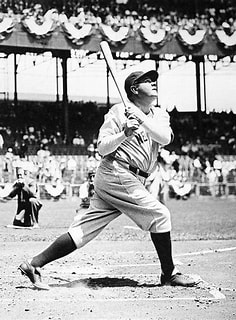
It was a century ago that Babe Ruth was in the middle of what can be considered his best season ever and one of the best in Major League Baseball history.
We all know the basics of the Babe Ruth story—the son of a saloon keeper, the rowdy youngster sent off to private school. The young man who could hit a baseball a mile and pitch darts with unmatched velocity. There were his early years with the Boston Red Sox where he pitched them to three World Series Championships and then began his conversion from outstanding pitcher to phenomenal hitter. And then the astonishing, fateful trade from the Sox to the New York Yankees in December 1919.
Ruth changed the sport with his sensational 54 home runs in 1920 as he became a full-time outfielder and the game’s first superstar slugger. He was even better in 1921 when he hit 59 home runs and led the Yankees to their first ever American League pennant. With his unmatched power and fun-loving personality Ruth was now the most popular and dominant player in baseball. The country had just come out of the dark days of a world war and baseball was recovering from the “black sox scandal” of 1919. The bombastic Babe was just the tonic the country yearned for, and baseball needed so desperately.
Ruth hit an unfathomable total of 113 home runs over those first two years with the Yanks and single-handedly changed baseball from a game of station-to-station strategy to one of crowd pleasing, majestic moon shots. But his career had a setback in 1922 when he missed the first month due to a suspension and more games due to an altercation with a fan. He missed a total of forty-two games, and his production was way lower than was expected of him. Although the Yankees once again won the pennant, the New York Giants for the second straight time, beat the Yanks in the World Series. The Babe was a huge disappointment for his growing fan base as he batted a miserable .118 against the Giants.
Determined to make amends for his lackluster 1922 season Ruth went on a tear in 1923. One hundred years ago this month Ruth was hitting .381. He ended July batting .390 with 24 home runs. In August he hit .500, going 40-for-80 and moved his average over .400 as he battled Harry Heilmann for the batting title. One notable change for Ruth was the opposition’s strategy to walk him constantly. Lou Gehrig was not yet a fixture in the Yankee lineup and Ruth lacked his protection, so it was common to give the Bambino a base on balls. One afternoon in June against Cleveland, the Babe doubled in his first at bat and was walked intentionally his next four times up. He walked an incredible 170 times that year—a record that stood for the rest of the 20th century and was only broken during the steroid era. Ruth eventually came in second in the batting race, though his .393 still stands as one of the highest ever for a power hitter eclipsed only by Ted Williams in 1941. Ruth completely dominated the AL in stats in 1923. He won the home run title with 41, was first in runs (151), total bases (399), RBIs (131), walks (170), on-base percentage (.545), and slugging percentage (.764). His on base plus slugging percentage was a scintillating 1.309. He was fourth in hits (205) and third in doubles (45). But his most incredible stat was one that we don’t hear much about. He reached base an astonishing 379 times. Think about it. In 152 games the big guy averaged being on base almost 2 ½ times per game! And that is a record that no amount of PED’s could overcome and still stands today.
Ruth continued his torrid hitting in the World Series as the Yankees once again faced the Giants. The Bambino blasted three home runs and batted .368 leading the Yankees to their first World Series Championship beating their cross-town rivals four games to two. This was also the year Yankee Stadium opened having been built because the Yanks, who were also playing in the Polo Grounds, were no longer welcome. Along with helping to bring the first championship to the new stadium Ruth christened the sparkling new venue with its first home run which he hit on opening day in April.
What makes this Ruth’s best season ever was his outstanding performance in the field. He was the American League’s best right fielder. The Babe is not often thought of as a great fielder, but he was a sound outfielder for most of his career and in 1923 he was at the top of his game leading all AL right fielders with a .973 fielding percentage. He also threw out 20 baserunners and had 378 putouts.
Babe Ruth would go on to have many stellar seasons and a Hall-of-Fame career but in 1923, one hundred years ago, he had his best season ever.
References: New York Yankee Seasons of Glory by William Hageman and Warren Wilbert and Baseball-reference.com
Last night New York Yankees’ righthander Domingo Germán pitched a perfect game against the Oakland Athletics in the Oakland Coliseum. It was only the 24th perfect game in major league history and the first since 2012. The flawless Yankee hurler used only 99 pitches to set down the A’s compiling 9 strikeouts in the process. He used an awesome curveball fifty percent of the time and completely corralled the Oakland batting order. For the most part it was an easy game for the Yankee defense with only a nice, backhanded stop by first baseman Anthony Rizzo needed to preserve the gem. The New York offense came to life providing 11 runs, the most ever in a perfect game. Yankee manager Aaron Boone called Germán’s performance a masterpiece. Catcher Kyle Higashioka agreed saying it all came together for Germán and he was amazing. What is most surprising is that Germán had been awful in his last two games allowing 17 runs in 5 innings. He is the only pitcher ever to pitch a perfect game after giving up ten runs in his prior game. But that was all in the past as the crafty Dominican was in complete control last night.
It was the fourth perfect game pitched by a Yankee. The first one was the memorable performance by Don Larsen in game five of the 1956 World Series against the Brooklyn Dodgers. Almost 43 years later in 1998 David Wells spun a perfect game on Beanie Baby Day at Yankee Stadium. David Cone followed up the next year with a perfect game against the Expos. Ironically that performance occurred on Yogi Berra Day at the Stadium and Larsen was in attendance.
Germán, having been born in the Dominican Republic, is only the third pitcher born outside of the USA to pitch a perfect game; Félix Hernández in 2012 for the Seattle Mariners was born in Venezuela and Dennis Martínez in 1990 pitching for the Montreal Expos was born in Nicaragua.
Of the previous five perfect games three came in 2012 and two in 2010. Hernández pitched his against Tampa Bay on August 15, 2012, Matt Cain against Houston on June 13, 2012, and Philip Humber against Seattle on April 21, 2012. The perfect games hurled in 2010 were by Roy Halladay against Miami on May 29 and Dallas Braden against Tampa Bay on May 9.
It seems as if perfect games occur in bunches so be on the look-out this year!
On a personal note, those of you who are into Fantasy Baseball will appreciate this. Domingo Germán is on my fantasy team and based on his recent miserable performances I strongly considered benching him this week. But I saw that his start this week was against Oakland, the team with the worst offense in the majors. For that reason, fortunately, I kept Germán active this week. What could be worse than to have one of your fantasy pitchers inactive while pitching a perfect game? Whew! That was a close one.
One hundred years ago this day the new home of the New York Yankees opened on 161st in the Bronx. The Yankeess who had previously played in the Polo Grounds, sharing the facility with the National League New York Giants, were asked to leave following the 1922 season. It was for the better since the two teams were becoming intense rivals having squared off in the 1921 and 1922 World Series. Both were won by the Giants. The new ballpark which cost $2.5 million would be called Yankee Stadium and soon earn the nickname “The House That Ruth Built”.
Yankee Stadium
April 18, 1923 was the season opener for New York against the Boston Red Sox, the Babe’s former team. According to the Chicago Tribune reporting on the event, “governors, generals, politicians, and baseball officials gathered solemnly today to dedicate the biggest stadium in baseball. But it was a player who did the real dedicating. In the third inning, with two teammates on base, Babe Ruth smashed a savage home run into the rightfield bleachers, and that was the real baptism of the new Yankee Stadium.” The Yankees went on to easily defeat Boston 4-1.
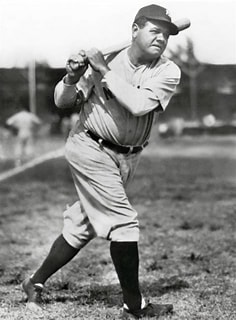
The Babe
The Stadium would remain on that location for 86 years hosting 39 American League Pennants for the Yankees and 26 Yankee World Championships until it was demolished for the New Yankee Stadium which opened in 2009. Ruth would go on to hit 258 more Yankee Stadium home runs, only Mickey Mantle who played for 18 years in New York hit more.
On a personal note: I attended Yankee Stadium many, many times; as a kid with my father and brothers, as a teenager with my buddies and as an adult with my family. Some of the trips are loosely portrayed in my novel Mickey Mantle’s Last Home Run. In those scenes in my book, I routinely referred to Yankee Stadium as The Stadium, “stadium” always capitalized. This gave my editor fits. In my neck of the woods here in northern New Jersey going to a Yankee game could commonly be expressed by saying going to The Stadium. We all knew that meant Yankee Stadium. Sure, Shea Stadium was around but The Stadium could only mean Yankee Stadium. As happened far too often, my editor won out, explaining that if I wanted to appeal to a larger audience, clarity would be best, and Yankee Stadium would be Yankee Stadium not The Stadium in my book. For the most part I accepted my editor’s suggestions and my book benefited from it, but to me, to this day, Yankee Stadium will always be “The Stadium”.
References: The Yankee Encyclopedia by Mark Gallagher and Walter LeConte
New York Yankees Season of Glory by William Hageman and Warren Wilbert
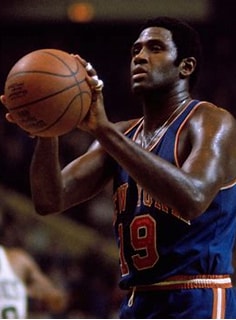
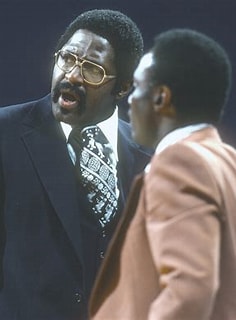
New York Knickerbockers’ star center Willis Reed died Tuesday at the age of 80. He was the heart and soul of a Knicks team that made it to the NBA Playoffs for seven years in a row from 1967 to 1973—winning the Championship twice in 1970 and 1973.
I’ll never forget that joyous night in May 1970 when the injured Willis Reed emerged from the Madison Square Garden tunnel to spur the Knicks to their game-seven victory over the Los Angeles Lakers to secure the first ever NBA Championship for the Knicks.
It was a time when the New York metropolitan area fanbase was split between the loyalist fans of the Yankees and the football Giants and the upstart fans of the Mets and Jets. Us loyalists were devastated by the recent demise of our storied Yankees and Giants as they plummeted to futility in the late sixties and early seventies. Our stars like Mickey Mantle and Frank Gifford were gone. Humiliation then set in when matinee-idol Joe “Willie” Namath and the Jets stunned the world with a Superbowl victory in January 1969 and Tom “Terrific” Seaver led the Mets to a startling World Series Championship later in October.
But then came our Knicks to the rescue. The ABA was in its infancy, so all eyes were on the NBA, and it seemed everyone; Yankee fans, Mets fans, Giant fans and Jet fans were all rooting for the Knicks. And the Knicks came through in thrilling fashion.
It is an understatement to say that Reed was the heart and soul of the Knicks. He was more than that. He was the glue that kept the team together. He was the Captain that made his talented teammates; Walt “Clyde” Frazier, “Dollar” Bill Bradley, Dave DeBusschere, Dick Barnet, Phil “Action” Jackson and later Earl “the Pearl” Monroe and Jerry Lucas play a brand of team-oriented winning basketball rarely seen.
At 6-10 and 240-pounds Reed was a powerful presence at center for the Knicks. Yet he had the sweetest mid-range jumper of any center playing at that time. In his ten-year career with New York Reed averaged more than twenty points five straight seasons. He was an All-Star seven straight years. He won the NBA MVP in 1970 and was twice named the MVP of the playoffs. He was the first player to be named MVP for the All-Star game, the playoffs, and the NBA all in one season.
But he will always be remembered for that night in May. Reed sat out game six due to a deep thigh injury and the Lakers behind Wilt Chamberlain’s 45-point performance trounced the Knicks setting up the pivotal game seven in the garden. For us loyalist fans the game meant everything. But how could our team win without Willis? Our prayers were answered when Reed came limping out from that MSG tunnel, ready to tough it out on the court. He hit his first two jump shots and the garden crowd was electric. Reed inspired his teammates to a thorough 113-99 drubbing of the Lakers. And with star point guard Walt Frazier “dishing and swishing” his way to 36 points the Knicks were NBA Champions. Us loyalist fans had a measure of redemption, and the New York fandom was united in our jubilation.
Reed would go on to lead the Knicks to another Championship in 1973. The Knicks won that series against the Lakers in five games, and after his game five performance of 18 points and 12 rebounds Reed said, “it was my best playoff performance since the championship in 1970”. New York has not had another championship.
Reed had a successful coaching career after his playing days.
Born in Lico, Louisiana in 1942 Reed was a star player at Grambling State and a second-round pick by the Knicks in 1964. Reed retired after the 1974 season due to a severe case of tendonitis. His New York Knick teams are considered the best teams ever in New York basketball. Reed went on to have a successful coaching career leading the Knicks to the playoffs in 1978. He also coached Creighton and the New York Nets and then had successful working in the front office.
But Reed will always be remembered for that night in May 1970. That night of redemption.
RIP # 19.
A personal anecdote.
While reminiscing about Willis Reed a friend of mine told me a story about that night in May. He and a group of classmates were in Boston for a student council convention. They had gone through a grueling day of workshops covering such riveting topics as; the history of bicameral governing, Roberts Rules of Order and how to select a prom queen in the modern world of women’s lib. Prior to settling down in their hotel to watch game seven they agreed some liquid refreshment would be in order.
But this was 1970, our senior year (two years removed from the tumultuous year of my novel Mickey Mantle’s Last Home Run) and there was one problem. No one was old enough to purchase any beer. Fortunately, one member of the group looked older than his age, partly because he was trying to grow a goatee. He reverently referred to his emerging facial hair as his “Willis whiskers” in honor of his favorite basketball player Willis Reed. Sure enough he was able to successfully purchase several six pacts, flashing only his Willis whiskers and a big smile—no ID required. The group then sat back and enjoyed, in style, what forever will be known as “The Willis Reed Game”.
References:
NBA.com
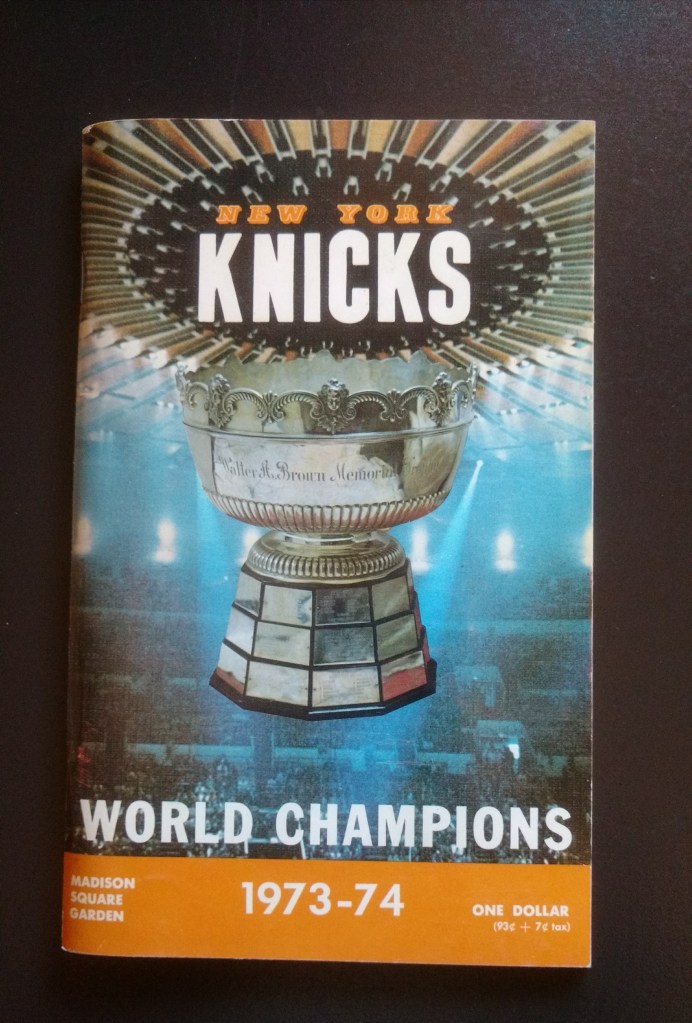
Yearbook, Official Guide and Record Book of the New York Knickerbockers Basketball Club 1973-74
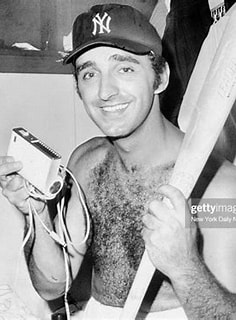
Former Yankee star Joe Pepitone passed away Monday at the age of 82. Born in Brooklyn, Pepi, as he was known, brought style and pizzazz to the staid New York Yankees when he arrived on the scene as a brash rookie in 1962. He was known as much for his waves of dark hair as he was for his power hitting and slick fielding. He shocked the major leagues by bringing a hairdryer into the locker room and though the world may have been on the edge of nuclear war, Pepi stole the headlines with his blow-dried locks.
Pepitone’s emergence allowed the Yankees to trade away their solid first baseman Bill Skowron at the end of the ’62 season for Dodger pitcher Stan Williams. Pepi then took over first base and had several fine seasons for the Bombers. He was a three-time All-Star and helped lead New York to two American League Pennants in 1963 and 1964. He averaged 23 home runs a season over his seven years as a starter for New York and earned three Gold Gloves for his exceptional play at first base. Remarkably, it was Pepi who took over in centerfield when the hobbling Mickey Mantle moved to first base in 1967.
My most searing memory of Pepitone came in the 1963 World Series. It was game four and the Yanks were up against the wall, down three games to zero to the LA Dodgers. The Dodgers had extraordinary pitching that year led by the unhittable duo of Sandy Koufax and Don Drysdale. Koufax was pitching another masterpiece in game four, matched by a superlative pitching performance by Whitey Ford. Trailing 1-0 in the top of the seventh, Mantle gave New York hope with a game-tying home run. But in the bottom of the seventh disaster struck for the Yanks. Jim Gilliam hit a routine ground ball to Clete Boyer at third, but Pepitone at first base astonishingly failed to catch the cross-diamond throw from Boyer. The throw hit the heel of Pepitone’s glove and bounded far enough away to allow Gilliam to go all the way to third. Tommy Davis then knocked in Gilliam with a sacrifice fly and Koufax sealed the 2-1 victory for the Dodgers with two scoreless innings in the eighth and ninth. Pepi later explained that he momentarily lost Boyer’s throw in the light-colored shirts of the sundrenched fans behind third base. It was a crushing way to end the series even though New York was thoroughly over-matched by the LA pitching.
Pepitone somewhat redeemed himself in the 1964 World Series with a big grand slam home run against the Cardinals leading New York to a win in game six. Ultimately Pepi’s time ended in disappointment with the Yankees. Known as the “Prince of Potential” or “a poor man’s Joe Namath” the glamour boy never reached the heights of stardom hoped for by Yankee fans. After their AL pennant in 1964 the fortunes for the Yankees faded as did those of the flashy young phenom named Joe Pepitone.
Pepi finished his career playing with modest success for the Chicago Cubs. After he retired in 1973, he became a fixture at Yankee Old-Timers’ games and his warm personality and delightful sense of humor continued to charm Yankee fans. He will surely be missed.
RIP # 25
References:
Baseball Almanac, Baseball-reference.com, Alan Zevin/NYTimes
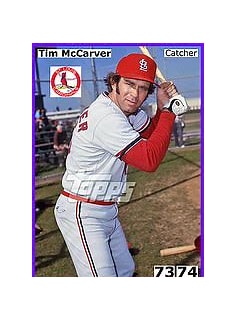
As we continue to remember the legacy of Tim McCarver who passed away last Friday, we should not overlook his contribution to that elusive thread of racial healing that drifted precariously throughout the turbulent 1960’s. Growing up in Memphis Tennessee the son of a policeman, McCarver could never be expected to be at the vanguard of the roiling civil rights movement of the sixties. He was a product of white America and possessed what he would describe as latent prejudices against African Americans. When he arrived in the major leagues his team, the St. Louis Cardinals, had already made a strong thrust toward integration by acquiring some of the best black ball players in the country such as Curt Flood, Bill White, Lou Brock, and Bob Gibson. It was his relationship with these players and especially Bob Gibson (who passed away in 2020) which would test McCarver’s ability to overcome his prejudices. All indications are that he did so successfully and during an era of civil unrest the McCarver-Gibson relationship became a model of racial harmony.
McCarver became the starting catch for the Cardinals in 1963 and he and Gibson would be battery mates for the next six years before McCarver was traded to the Phillies. Gibson played his entire 17-year career with the Cardinals, winning 251 games, earning the Cy Young Award twice and MVP once while eventually being inducted in the Hall of Fame. His 1968 season was one for the record books. That year he had an incredible 1.12 ERA. The lowest ERA by any pitcher in the modern era (since 1920). During their six years together, Tim caught 197 of Gibby’s starts and they had tremendous success winning the National League Pennant three times and the World Series in 1964 and 1967.
Through this time Gibson was considered an extremely talented pitcher and an intimidating figure on the mound. Some would consider him mean and menacing with racial undertones. But McCarver always considered his battery mate a gentleman and friend who was just a fierce competitor on the mound in much the same way as LA Dodger pitcher and contemporary, Don Drysdale.
Over the years the pair became good friends despite their different backgrounds and were goodwill ambassadors for the game of baseball during an unsettled time. One such example was their appearance together on The Ed Sullivan Show just after defeating New York in the 1964 Series. Their relationship though was not without some give and take. McCarver often spoke of the education he received as a newcomer in St Louis. His teammates Gibson and outfielder Curt Flood were Black players who did not hesitate to confront or tease McCarver. As reported by The Guardian “when McCarver used racist language against a Black child trying to jump a fence during spring training, Gibson would remember getting right up in McCarver’s face. McCarver liked to tell another story about drinking an orange soda during a hot day in spring training and Gibson asking him for some, then laughing when McCarver flinched.”
“It was probably Gibby more than any other Black man who helped me to overcome whatever latent prejudices I may have had,” McCarver wrote in his 1987 memoir “Oh, Baby, I Love It!”
There were also lighter moments between the two. According to Tim Kirkjian of ESPN, “when McCarver went to the mound to talk to Gibson, he wasn’t always given a kindly welcome. McCarver famously said that Gibson was particularly ornery during one trip to the mound, and said to McCarver, the only thing you know about pitching is you can’t hit it.”
Probably the most significant incident between the two occurred in the morning after the assassination of Martin Luther King. The country was reeling with hatred and on the verge of an explosion, but McCarver tried to discuss the tragic news with Gibson. According to reporter Tim Wendell, “Gibson told McCarver that it was impossible for whites, no matter how well intentioned, to understand how he was feeling that morning. It didn’t help that McCarver was from Memphis, where King was murdered. Yet McCarver stood his ground, telling Gibson that it was possible for people to change. If anything, he was a prime example. McCarver reminded Gibson that when the catcher was new to the team, Gibson and Curt Flood teased him about his reluctance to share a sip of soda offered by a black man. Bob and I reached a meeting of theminds that morning, McCarver later said. That was the kind of talk we often had on the Cardinals.”
Gibby and Tim remained friends through the years.
What is most important about the Tim and Gibby relationship is they learned from each other. They learned how to listen, respect each other and to get along together on the biggest stage in a complicated world. One can only assume that our country was made just a little bit better by the actions of these two very talented and gracious gentlemen.
Sources:
Baseball-reference.com,
The Guardian
Tim Kirkjiian
Tim Wendel
On a personal note: If you have had the chance to read my novel Mickey Mantle’s Last Home Run you will remember that one of the protagonists, an African American teenager named Jonathan, was a huge fan of the St. Louis Cardinals and especially Bob Gibson. Jonathan was looking for role models and, as a struggling JV pitcher, who could be a better role model than Bob Gibson? Jonathan, who had a rebellious spirit, especially liked Gibson because Gibson was “mean”. And if you were black in the white dominated society you had to be mean according to the teenager’s reasoning.
The main theme of the novel is played out as Jonathan reacts to the murder of his other hero Martin Luther King and refuses to accept the condolences from his white friend TJ the book’s narrator. The emotions expressed by Jonathan and TJ are nearly exactly those described by Wendel’s reporting. I was unaware of the Tim and Gibby incident in April 1968, but surely similar confrontations were common back then and remain so today.
Legendary broadcaster and former All-Star catcher Tim McCarver passed away yesterday at the age of 81. McCarver had a long and distinguished 21-year career as a catcher for both the St. Louis Cardinals and the Philadelphia Phillies.
Although he was considered a light hitter throughout his career my most searing memory of McCarver occurred in the 1964 World Series when his Cardinals faced off against my Yankees. McCarver was in only his second season as a starter, and among the talented batting order of the NL Champion Cardinals, which included Lou Brock, Ken Boyer, Bill White and of course Hall-of-Famer Bob Gibson, outside of the St. Louis area McCarver was a virtual unknown.
With the Series tied at two games apiece, game five was a real nail-biter. After listening to the game on my trusty transistor radio in school, at the bell I like most of my friends, raced home on our bikes to watch the rest of the game. Tied 2-2 after nine innings, the game entered the tenth with Pete Mikkelsen on the mound for New York. Mikkelsen was the Yanks’ top reliever that year and manager Yogi Berra’s favorite. But to me and my brothers, who joined me watching the game, the erratic righty was nothing but agita.
Sure enough, it took Mikkelsen no time to pitch himself into a jam. With Bill White and Dick Groat on base McCarver came to the plate. A left-handed hitter, he had a unique and somewhat weird batting stance, holding his bat close to his body and just behind his left ear. With virtually no power (he hit only 99 home runs in his two-decade career) McCarver was not considered a threat. But it didn’t take him long to blast a fat Mikkelsen pitch deep into the lower rightfield stands giving the Cards a 5-2 victory. My brothers and I looked at each other in disbelief—thinking who is this guy?
St. Louis would go on to win the Series in seven games with McCarver hitting at scintillating .478. He appeared in two more World Series with the Cards, winning against the Red Sox in 1967 and losing the next year to the Tigers.
McCarver is probably best known for his career as a broadcaster. He and Joe Buck were the voice of the World Series for 24 years and he was elected to the Broadcasting Hall of Fame. But I will never forget that October afternoon so many years ago when that plucky, little known Cardinal catcher ruined my day.
This past baseball season sports fans everywhere got to marvel as Aaron Judge pursued one of the iconic records in the history of professional sports—the single season home run record. Judge set the record this September with his monumental 62nd home run blast. This winter we watched in anticipation as another iconic sports record was set to fall.
Last night LeBron James of the Los Angeles Lakers hit a fade away jumper amassing 38,388 points for his career to surpass the all-time NBA scoring record set 39 years ago by basketball legend Kareem Abdul-Jabbar.
In breaking the seemingly impossible record James adds to his incredible list of accomplishments. Remarkably, even as a scoring dynamo, James is 4th on the all-time NBA list of assists. He has four NBA titles with three different teams and has been awarded four league MVP’s. He also has 2 Olympic gold medals.
Throughout his 20-year career James has been an ambassador for the game of basketball and has helped increase the sports’ popularity throughout the world.
As we saw with Aaron Judge’s accomplishments, all records are made to be broken. But not without hard work, persistence, and an abundance of talent, all of which are displayed by LeBron James. And incredibly, at the age of 38, James remains one of the top players in the NBA, so there is no telling how many other records are within his reach.
It was hard to root for the Houston Astros in last fall’s World Series. The cheating scandal of a few years back still hadn’t faded. But one thing that wasn’t hard to do was to root for Johnnie B. “Dusty” Baker.
Dusty Baker had a long and productive 19-year career as a power-hitting outfielder for the Braves and the Dodgers. I remember him well against my Yankees in the 1977, 1978 and 1981 World Series. He was a dangerous right-handed hitter, usually batting cleanup in a very potent LA lineup. Although Reggie Jackson stole the show in the 1977 World Series, Baker was a steady force for the Dodgers hitting .292 after an MVP performance against the Phillies in the NLCS.
In game one of the 1978 World Series Baker had three hits as the Dodgers pounded the Yanks 11-5. But it was not until 1981 that Dusty finally found the promised land as the Dodgers became World Champions defeating the Yankees four games to two with Baker contributing 2 hits in the deciding sixth game.
As solid as Baker was as a player he is better known today for his successful career as a manager. Baker has managed for 25 years winning over 2,000 games with a .539 winning percentage. His steady competent managerial style was on hand in his very first assignment as he led the San Francisco Giants to 103 victories in 1993, falling short of the divisional title by one game to the red-hot Atlanta Braves.
Altogether Baker won eight divisional titles over his years managing the Giants, the Reds, the Cubs and the Astros and was National League Manager of the Year three times—winning the NL pennant three times, a World Series title eluded him. But it was this past year that Baker’s long years of dedication, hard work and baseball wisdom got him to the top. Having taken over the scandal-ridden Houston Astros in 2020 Baker righted the ship and provided solid guidance to a young talented team looking to move beyond their franchise’s past troubles. And it was Baker’s excellent leadership that propelled the Astros to their first untainted championship. The decisive four games to two victory by Houston over Philadelphia was Dusty Baker’s finest moment.
After 41 years Dusty Baker is once again a World Champion, an honor he truly deserves and one all fans of the national pastime can cheer.










 Back Home With Baseball and Beyond