From Casey to KC: Kevin Kane’s Unique Take on a Baseball Classic

Recently I had the pleasure of meeting Lawrence Hogan author of several books about Black American baseball. His book Shades of Glory is widely considered a baseball literary classic. Larry recommended a video that he produced featuring his friend and associate Kevin Kane. Mr. Kane is a writer, a musician and a playwright. The video features Mr. Kane’s reading of his poem From Casey to KC: Breaking the Line of the Mudville Nine.

We have all heard of the famous poem Casey at the Bat by Ernest Lawrence Thayer. That poem became famous after being performed by actor DeWolf Hopper and has been frequently recited by many different performers in many different venues.

As you will see from the link below Mr. Kane has an intriguingly different take on Thayer’s theme and an updated performance that matches and exceeds Hopper’s. I’m sure you’ll enjoy it.

Bing Videos

From Casey to KC: Breaking the Line with the Mudville Nine was commissioned by the Cooperstown National Baseball Hall of Fame where Mr. Kane presented a program of readings with NPR essayist and sportswriter Frank DeFord.  DeFord read the original Casey, and then introduced Kevin, who read his work. Since then, Kevin has done readings of this long-form story-poem at New York City’s 92nd Street Y, at the Society for American Baseball Research’s National Conference and at many libraries, historical societies and colleges in New Jersey and New York, and at the National Negro League Museum in Kansas City. 
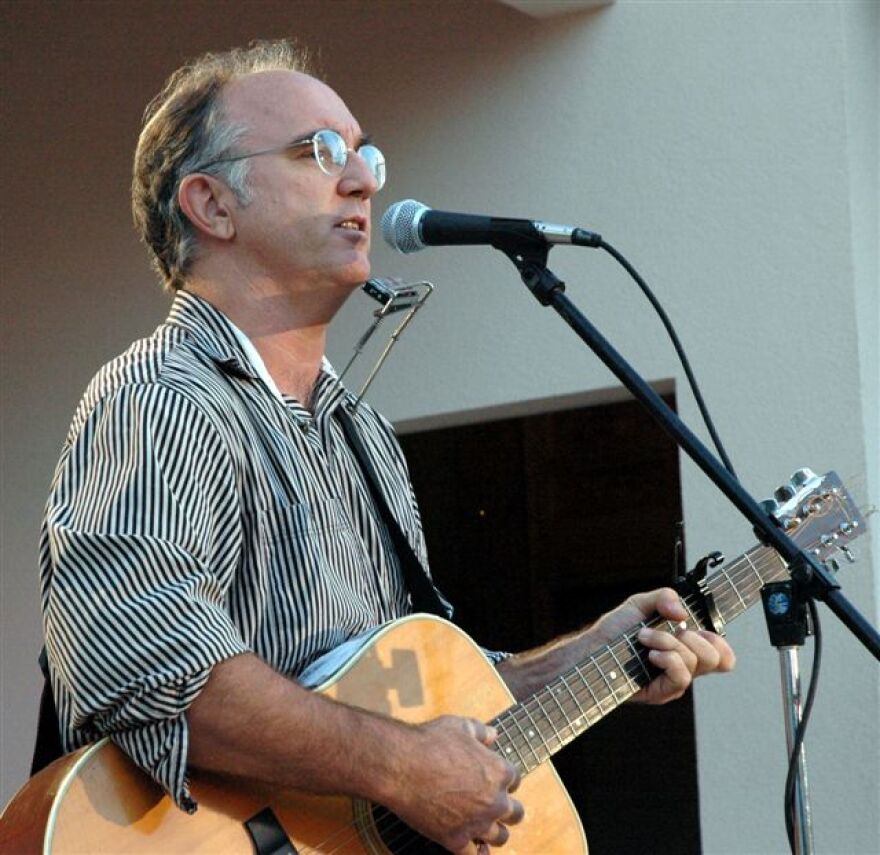
Singer-songwriter, playwright and poet Kevin Kane

Mr. Kane’s play A Love of the Game is one of many of his plays produced in New York City and regional theaters. As for his musical talents one CD reviewer suggested his writing was “brilliantly funny, yet tragic.  A cross between Kris Kristofferson and John Prine.  He writes country standards that will last.”  His songs have been covered on solo efforts by members of Southside Johnny and the Asbury Jukes, by many club/cabaret singers in New York City, and by a couple of singers in Houston.  He’s been writing, performing, and recording for a long time – with many CDs on iTunes, Spotify and other digital outlets.

Kevin is proud to note that he has been featured on WFUV-Fordham radio, as a guest artist on their “A New York Slice—NYC Singer/Songwriters of Note.”

Kevin Kane is truly a talented guy.

Hogan’s Unheralded Heroes

Last Saturday I had the pleasure and privilege of meeting Dr. Lawrence D. Hogan at the Local Author Fair in the Fanwood Memorial Library.

Dr. Hogan is Professor of History Emeritus from Union County College in New Jersey where he taught African American History for 37 years. He is the author of A Black National News Service: Claude Barnett and the Associated Negro Press, and The Forgotten History of African American Baseball, and principal author and editor of Shades Of Glory, published by National Geographic.

He is a delightful man to speak with and shared some interesting stories about his life studying baseball, particularly Black Baseball. He talked about the charms of long-forgotten Ruppert Stadium in Newark where the Newark Eagles played in the Negro National League and his long friendship with Eagle star Monte Irvin who eventually played for the New York Giants and Chicago Cubs. He told me about an interview he had with Yankee shortstop Tony Kubek for his latest book So Many Seasons in the Sun. He was gracious enough to buy a copy of my book Mickey Mantle’s Last Home Run and after reading the first few pages warmed my heart when he commented on his appreciation of the iconic Pulaski Skyway which is mentioned on page four.

circa 1950: Outfielder Monte Irvin #20 of the New York Giants poses for a portrait, crouching and holding a baseball bat, 1950s. Irvin played for the Giants from 1949-1955. He also played for the Negro National League before his eight years in the Majors. (Photo by Photo File/Getty Images)

Dr. Hogan is also the executive producer of Before You Can Say Jackie Robinson: Black Baseball in America in the Era of the Color Line a documentary that is now available on You Tube. This engrossing and entertaining documentary features veteran Negro League players, places where they played, and fans who saw them play. It includes interviews with Max Manning, Larry Doby and a moving tribute to Ray Dandridge as he is finally recognized for his immense talent and is inducted into Baseball’s Hall of Fame. The documentary is part of a program that Dr. Hogan along with his friend Kevin Kane, offer to museums, libraries, historical societies, colleges and other venues.

Ray Dandridge was elected to the Baseball Hall of Fame in 1987

Here is the You Tube link.

Bing Videos

Dr. Hogan, (I guess I can call him Larry since we are neighbors and he lives only a few blocks away) is quite a guy.

The Greatest World Series Game Ever?

Now that we’ve had a little time to reflect on Saturday night’s classic World Series game, I can now say that the LA Dodgers 5-4 win in 11 innings against the Toronto Blues Jays in game seven of the 2025 World Series was one of the greatest World Series games ever, if not the greatest. But just to be sure I checked in with my good friend Grandpa Gordy who, as you know if you have read my book Grandpa Gordy’s Greatest World Series Games, is an expert on World Series games. This was our conversation.

“Well let me think. It was a pretty darn good game that’s for sure.”

Then I said, “well, it had all the ingredients to be one of the greatest games ever, filled with tremendous drama. “

“Got to agree with that. It was a seventh game. Don’t get any more dramatic than a seventh game.”

And I added, “and it was decided in the final inning.”

“Extra innings to boot. Now as I recall there were some pretty darn good extra inning-seventh games. The one way back in 1924 when the Washington Senators beat the New York Giants was a doozy. And it was in my book.”

“That’s right. I know and so was the 1991 Minnesota Twins’ 1-0 victory over the Braves.”

“Hey and don’t forget when the underrated Florida Marlins beat Cleveland in 1997.”

“That’s right. It went 11 innings.”

“In my book too. And there’s that classic game in 2016 when the Chicago Cubs ended their 108-year draught and finally won a World Series. That was another doozy.”

“I don’t remember that one from your book.”

“You wouldn’t because my book came out in 2002.”

“Sorry. I didn’t mean to be critical”

‘That’s okay. I’m working on my updated version.”

“So, Friday night the Blue Jays were only two outs away from winning the World Series when the Dodgers’ number nine hitter Miguel Rojas blasted a game-tying home run. Pretty dramatic.”

Miguel Rojas

“Well, that’s for sure but in 2001 the Yankees were only two outs away from victory with Hall of Fame closer Mariano Rivera on the mound when Arizona’s Tony Womack lashed a game-tying double.”

“Who?”

Tony Womack DIGITAL IMAGE Mandatory Credit: Jed Jacobsohn/ALLSPORT

“That’s right. You think Miguel Rojas was an unsung hero? Well, how about Tony Womack in the ninth inning of game seven against the Yanks!”

“Well, that’s true. But what about that incredible bottom of the ninth. The Blues Jays had the bases loaded, one out. The winning run ninety feet away and Rojas (again Rojas!) makes a backhanded stab at second base, stumbles, but still fires a laser to nail the Blue Jay runner at home by a millisecond. The Blue Jays literally lost the World Series by a millisecond! And then Andy Pages makes a sensational game-saving, World Series-saving catch in deep left-center field!”

“Yeah, hard to top that!”

“And then in the top of the 11th Will Smith hits the go-ahead home run.”

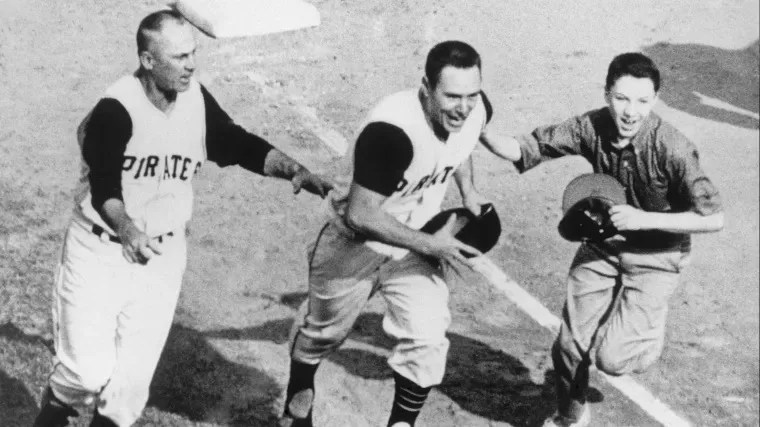
“That’s true but I’m sure you heard of that Bill Mazeroski fellow who hit the only walk-off, game-seven home run in World Series history way back in 1960 for the Pirates over the Yankees.”

“Yeah, you’re right about that. But what about Yoshi Yamamoto’s performance, pitching the final two innings in game seven after starting and winning game six.”

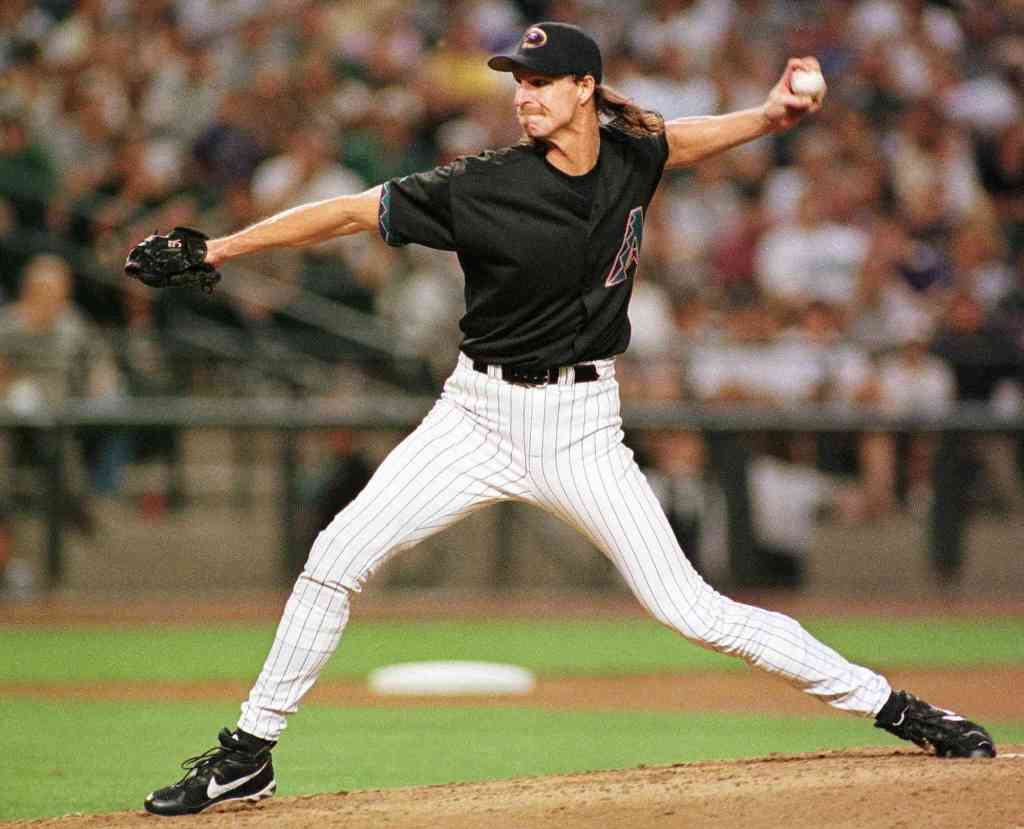
“Well, if I’m not mistaken that big ol’ scraggly-haired lefty Randy Johnson did the same thing against the Yanks in game six and game seven of the 2001 World Series.”

“Wow. That’s amazing. But what about the bottom of the 11th. The Blues Jays had first and third with only one out. The tying run was on third and the winning run on first.”

“Oh yeah. That was pretty incredible, but Kirk hit into a double play ending it.”

“A really nice clutch play but Mookie Betts.”

“No doubt about it. The defense in the entire Series was tremendous. But think about this.” Grandpa Gordy scratched his beard. “What if Kirk hit a gapper and that guy Madison Barger who was on first came flying around third and slid into home with the winning running, beating the throw by a millisecond. And Blue Jays have comeback and are the champs.”

“Oh yeah. That would have been truly sensational!”

“So if that happened there would have been no doubt that this was the greatest World Series game ever.”

“I guess we can agree on that.”

“Yep and that in a little over three months it’s “pitchers and catchers”.

“Agreed!”

References: Grandpa Gordy’s Greatest World Series Games https://amzn.to/2T9lYVT

And The Baseball Almanac

Big Joe, Lenny and the Wild Thing

As we get ready for tonight’s game three of the World Series between the Toronto Blue Jays and the Los Angeles Dodgers it’s a good time to take a trip back down memory lane to the last time the Blue Jays made it to the Series in 1993. In that Series, the Blue Jays against the Philadelphia Phillies, game six was one of the most memorable games in baseball history.

And if you haven’t learned about that game, you probably haven’t read my first book Grandpa Gordy’s Greatest World Series Games. It’s a great book for a baseball fan to read to your child or grandchild or just read it for yourself if you love the game. Chapter 13 entitled Game Six 1993 Big Joe, Lenny and the Wild Thing features that incredible game.

You can pick up the book by clicking on this link. https://amzn.to/2T9lYVT

Here’s a quick summary of that exciting game.

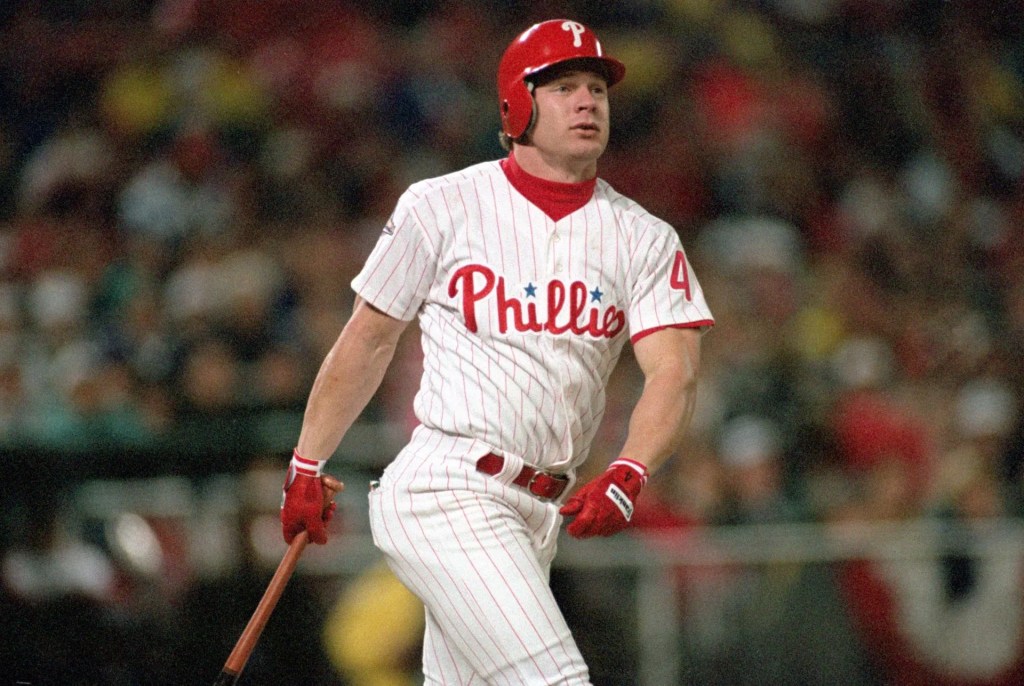
Lenny Dykstra

The Blue Jays, who were the defending champions, led the Phillies three games to two and were cruising through game six with a 5-1 lead going into the top of the seventh. It was then that “Little” Lenny Dykstra blasted a three-run home run of Dave Stewart to put the Phillies back in the game. They then pushed across two more runs and went ahead 6-5.

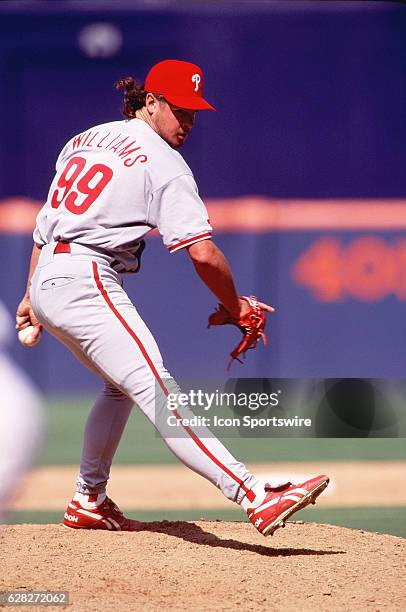
1993: Pitcher Mitch Williams of the Philadelphia Phillies in action during a Phillies game versus the San Diego Padres at Jack Murphy Stadium in San Diego, CA. (Photo by Icon Sportswire)

Toronto failed to score in the seventh and eighth and Philadelphia called on their fire balling closer Mitch “Wild Thing” Williams to pitch the ninth. Williams immediately got into trouble when by walking Ricky Henderson. After recording an out Williams faced the Series’ eventual MVP Paul Molitor who laced his 12th hit of the Series.

“Big Joe” Carter

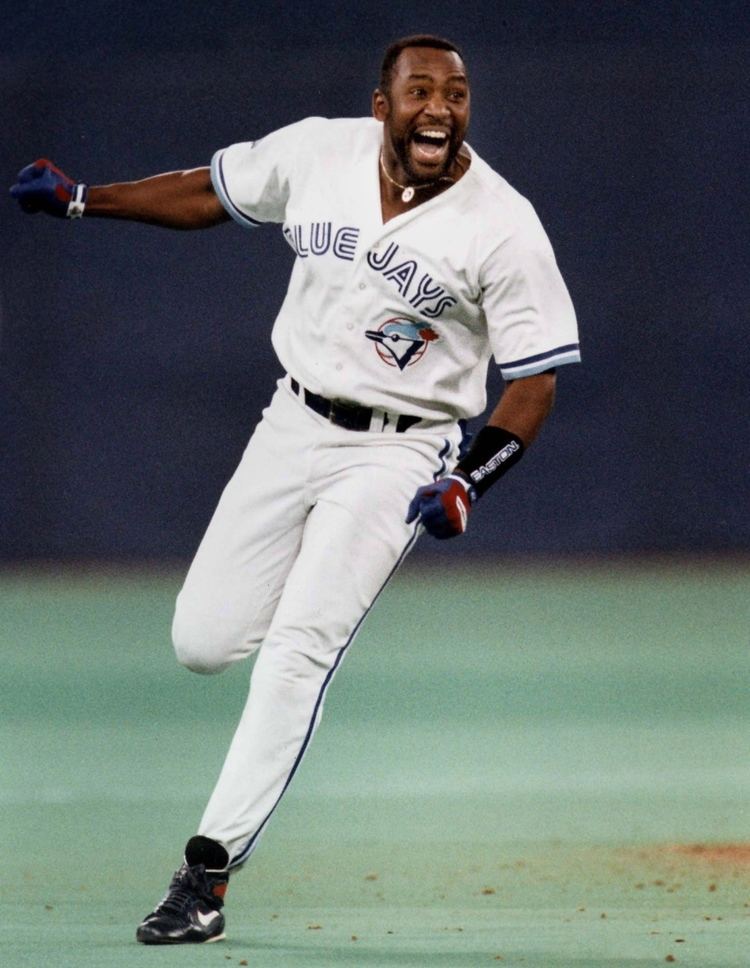
That brought up “Big Joe” Carter Toronto’s leftfielder and best slugger. During the regular season Carter led the Blue Jays with 33 home runs and 121 RBI’s. “Big Joe” got the best of the “Wild Thing” and lashed a line drive over the left field wall for a three-run, game-winning, World Series-winning home run. It was then, and still is, only the second time in World Series history that the Series ended with a walk-off home run. That time occurred in 1960 when Bill Mazeroski of the Pirates homered in the bottom of the ninth in game seven to beat the Yankees.

Let’s see what drama unfolds in the 2025 World Series and if Grandpa Gordy needs to add to his greatest World Series games.

Reference: Grandpa Gordy’s Greatest World Series Games, by Steven A. Falco 2002

Shohei-the-Kid Puts on a Really Big Show

As the 2025 World Series gets ready to begin this Friday, I would like to reflect on Shohei Ohtani’s incredible performance for the L.A. Dodgers in the pennant-clinching game on Friday night.

Quite simply it was the greatest performance by a single player ever in an MLB game. Period.

You can look it up.

The only other pitcher ever to hit three home runs in a game he was pitching occurred in May 1942. The pitcher was Jim Tobin of the Boston Red Sox. He pitched nine innings, allowed three runs and was credited with the win. He did not strike out a batter. It was a fabulous performance, but it occurred in a meaningless game in May during a time when baseball’s talent pool was being diluted by World War II.

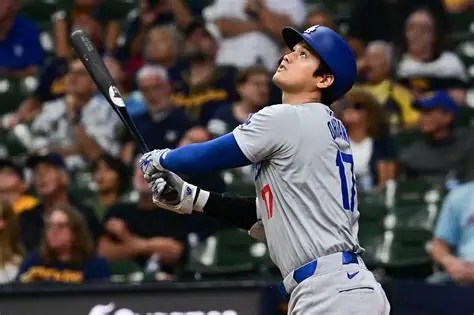
Ohtani only pitched six innings, but they were scoreless innings in which he struck out a whopping ten Brewers. Ohtani was also perfect at the plate, 3 home runs and one base on balls. And Ohtani’s performance came in a crucial pennant-clinching game. There have been many brilliantly pitched games in crucial games but never by a pitcher who hit three home runs.

Ohtani is also the only player ever to hit three home runs in a pennant-clinching game or playoff-clinching game. As for the World Series, Babe Ruth did it twice, in game four 1926 and game four 1928. “Mr. October” Reggie Jackson performed his dramatic feat in game six 1977. But Ruth and Jackson’s historic slugging was accomplished while leisurely patrolling the pastoral confines of right field.

For Ohtani it was quite a show that along with millions of baseball fans I was thrilled to watch.

Orion’s Constellation of Cringe

Orion Kerkering’s horrendous blunder in the final game of the Dodgers/Phillies National League Division Series was one of the worst baseball plays I have ever seen. I really feel bad for the guy, and it was a tough night for Phillies’ fans. My guest blogger Bruce Solomon put it all in perspective.

I spotted this headline in the NY Post after the game last week: 

Phillies’ season ends on reliever’s boneheaded error in extra innings

That led me to consider that Richard Orion Kerkering could find notoriety, if not infamy for the ages amongst baseball aficionados for season-ending miscues placed squarely, if unfairly, on one player’s shoulders, as in Merkle’s Boner in 1908 and Snodgrass’ $30,000 Muff in 1912.

To provide some historical heft for Bonehead Orion’s Star-Crossed Muff, here are the tales of Merkle’s Boner and Snodgrass’ Muff:

The Merkle Boner: The Story Of Fred Merkle

https://ourgame.mlblogs.com/fred-snodgrass-october-16-1912-cbcb6d2db26b

After watching the play, I suggested to wife that the most charitable thing Phillies’ management could do would be to trade Orion to a galaxy far, far away from the enduring wrath of the baseball fans of the City of Brotherly Love.

As balm for the pain of Orion’s moment of ignominy, I share a taste of what cracker jack sports writing was like in the bygone days of 1912 with this recounting of the eighth and final game of the 1912 World Series by one of the finest scribes of the day, Hugh Fullerton:

https://ourgame.mlblogs.com/snodgrass-muffs-one-2f74b9d200cf

Joost to Suder to Fain

By guest blogger Bruce Solomon

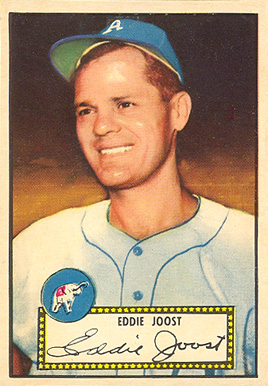
In 1949, the Philadelphia A’s set a still-standing major-league record by turning 217 double plays. The A’s went on to accumulate a three-year total of 629 DPs, a record that stands today, even with MLB’s longer playing seasons. Most of these twin-killings involved their keystone combination of shortstop Eddie Joost and second baseman Pete Suder, along with first baseman Ferris Fain. Using the meter of Franklin Pierce Adams’ famous “Tinker to Evers to Chance,” the A’s PR director Dick Armstrong in 1950 composed a poetic tribute to these now-forgotten A’s record-setters, “Joost to Suder to Fain”:

Voluminous prose has been written by those

Who have this one thought to advance:

That the greatest combine in the double play line

Was Tinker to Evers to Chance.

Those three famous Cubs were surely not dubs.

Their fielding was something sublime.

They were far and away the class of their day,

The double play kings of the time.

But they’ve since been dethroned and partly disowned.

No longer as kings do they reign.

For a new DP team is ruling supreme,

Known as Joost to Suder to Fain.

These sensational A’s have perfected their ways

To a point where they lead all the rest.

As twin killings go, three years in a row

They’ve ranked as the Major Leagues’ best.

There’s never a worry; they’ll comply in a hurry,

When a quick double play is desired.

A roller or liner just couldn’t be finer,

You can bet that two men are retired.

You may already know what the record books show,

Three years they’ve continued to shine,

All others surpassing this record amassing:

A total of six twenty-nine!

Eddie Joost rings the bell as a shortstop as well

As a mighty good man with the stick.

To select someone who has an arm that’s as true,

It would be an impossible pick.

On second there stands “the man with the hands.”

If a ball’s hit to Pete there’s no doubt.

You never need look, jot it down in your book,

It’s a cinch that the batter is out.

A hitter’s accursed with Ferris on first.

There’s no one as clever as he,

At spearing a bounder or sizzling grounder

And completing that tough three-six-three.

A long time from now, when they’re telling of how

So and so could get two with no strain,

We’ll think of the days of Connie Mack’s A’s,

And of Joost and Suder and Fain.

— Dick Armstrong, 1950

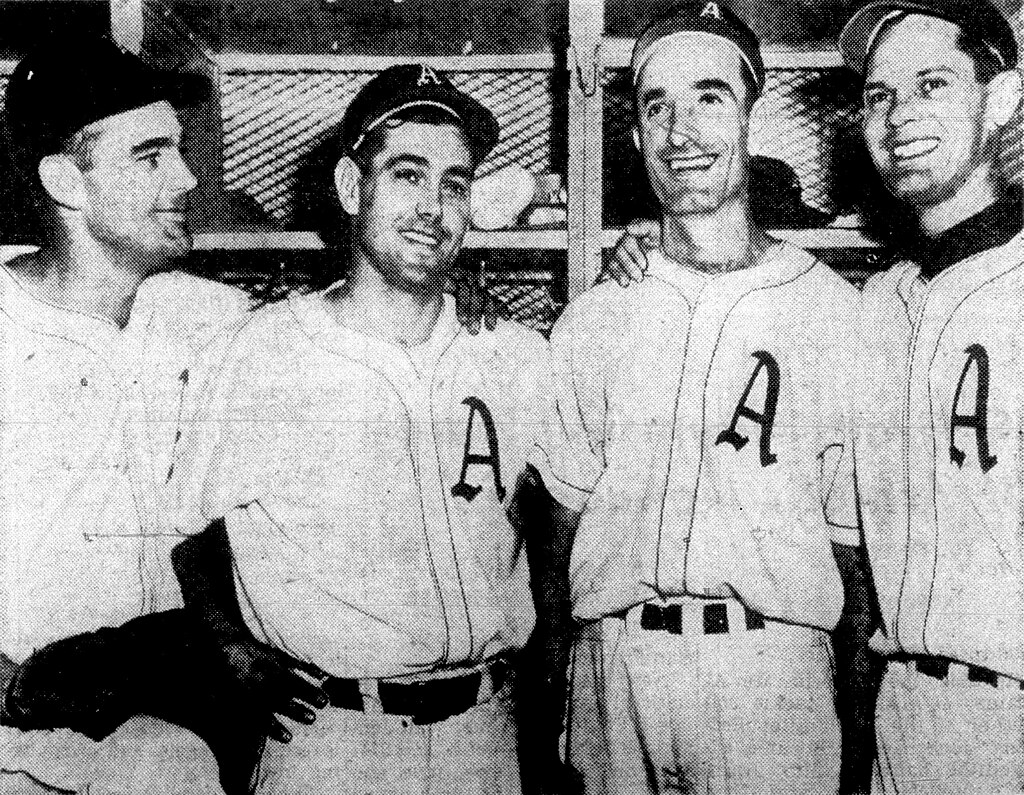
Ferris Fain, Hank Majeski, Pete Suder, Eddie Joost 1949

Billy Tried it Too

While researching my last post about Jackie Robinson’s iconic steal-of-home in game one of the 1955 World Series I made a remarkable discovery. I was studying the box score of that game reprinted on BaseballAlmanac.com and was dumfounded when I read the following baserunning notes:

SB-Robinson (1, Home off Ford/Berra). CS Martin (2, 2nd base by Newcombe/Campanella, Home by Bessent/Campanella).

Say what? Billy Martin was caught stealing home in the same game as Jackie Robinson’s iconic steal??

“Tis the truth!” Nobody ever talks about it, but Billy Martin tried to steal home in the same game as Robinson’s famous steal. And two innings earlier.

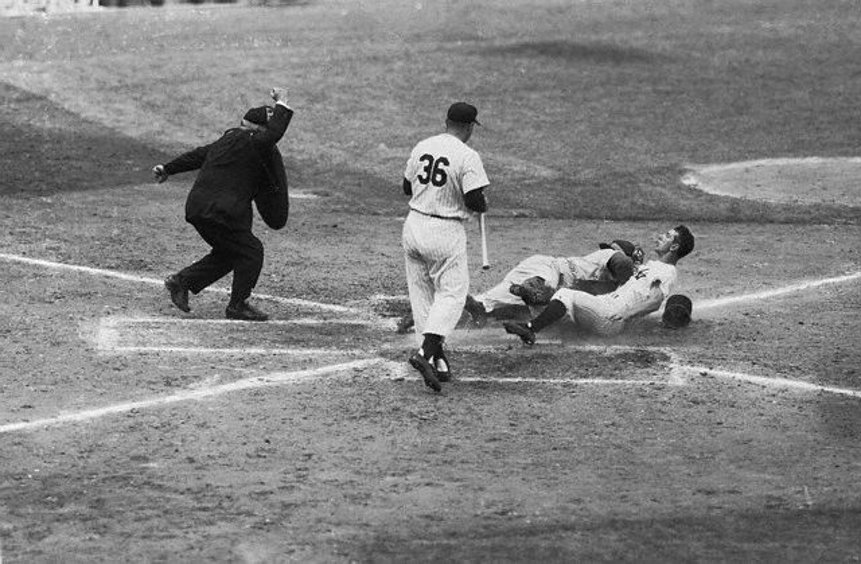
Billy Martin out stealing home in the sixth inning game one of the 1955 World Series

According to an article in SABR Martin tripled to deep left off Don Newcombe with two outs in the bottom of the sixth. Martin had already been caught stealing second earlier in the game. Joe Collins had hit a two-run homer in the inning and the Yankees had a comfortable 6-3 lead, so it was not a bad strategy to try to steal an insurance run with the bottom of the order coming up. Don Bessent had just replaced Newcombe on the mound when Martin took off for home and was tagged out by Dodger catcher Roy Campanella. The fiery pepper-pot Martin took exception to the high tag and took a few steps toward Campanella but decided instead to retreat to the Yankee dugout. He later said that he thought he was tagged in the throat. After the game Campanella spoke to the press. “Tell that little so-and-so that I missed. I tried to put the ball in his mouth.” Undoubtedly Campy knew that Billy had labeled him “spike shy” before the World Series started and so there was some bad blood between them.

It’s also quite possible that Robinson’s steal-of-home was instigated by Martin’s brazen attempt. Martin’s exceptional World Series play* had been a thorn in the Dodgers’ side for years and perhaps Robinson had had enough of Martin and needed to finally show up Bad Billy on the big stage.

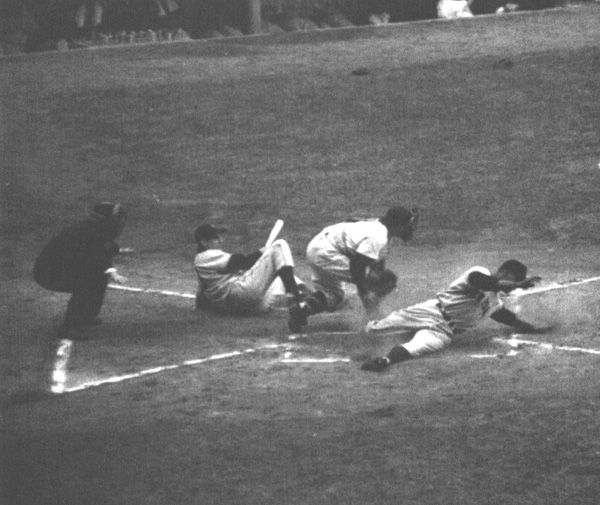
Here’s a bit more psychoanalytic baseball. Remember how Yogi Berra reacted to Robinson’s steal. He basically went ballistic. Well in another World Series game one, this time in 1951 against the New York Giants, Monte Irvin, the Giant’s dynamic young outfielder slid safely past Yogi’s tag for a steal-of-home. When Robinson accomplished his feat four years later ol’ Yogi must have been thinking “not again” and went crazy.

Monte Irvin steals home in game one of the 1951 World Series

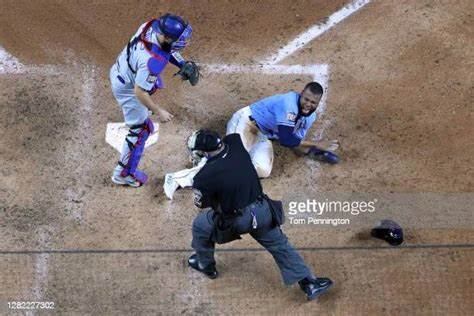
So how rare is a straight steal-of-home in the World Series? In the 119 World Series going back to 1903 there have been only 13 attempted steals-of-home and only five were successful. The last attempt occurred in 2020 when Manuel Margot of Tampa Bay was nailed in game five against the LA dodgers.

Manuel Margot out stealing home in game five of the 2020 World Series

Lonnie Smith of the Cardinals was out stealing home in game 6 of the 1982 World Series against the Brewers.

In 1955 game one Robinson was safe, and Martin was out.

Monte Irvin was safe in game one 1951.

We then have to go back 30 years for the next attempt and there were two 1921. Bob Meusel stole home for the Yankees in game two (Babe Ruth also stole two bases in that game, but not home). Mike McNally stole home for the Yankees in game one.

There were six attempts in the dead ball era and only Ty Cobb was successful when he stole home in game two of the 1909 World Series. He was out stealing home in 1908. Cobb was credited with a remarkable 32 steals-of-home in his career.

Fred Snodgrass was called out in 1911. Johnny Evers was out twice, 1907 and 1909 and Tommy Leach was nailed twice, in 1903 and 1909.

So back to Yogi’s lament as he commented on Robinson’s steal of home calling it a bad play. He may have been correct in theory. Of the 13 attempted steals-of-home in the World Series only five were successful. A .384 percentage. Good for a batting average not so good for baserunning when you consider the many other ways to score from third base even with two outs—any kind of base hit, a wild pitch, a passed ball, an error, a balk. And only once did the team with the successful steal home go on to win the World Series. That of course was the Dodgers’ by Jackie Robinson which we are still arguing about, but which may never have happened if not for Billy Martin’s brash attempt that nobody remembers.     

References: Baseballalmanac.com; SABR; Matt Kelly for MLB

*Check out my Billy Martin post from 2022.

The Steal of the Century

It was 69 years ago today that Jackie Robinson stole home for the Brooklyn Dodgers against the New York Yankees in game one of the 1955 World Series. It is a play that is this talked about and argued about to this day. And it is one of the moments in baseball history that explains Why We Love Baseball as told by Joe Posnanski in his great book of the same name. I’ll set the stage here and then let Posnanski take over with an excerpt from his fabulous book. Most baseball fans are familiar with the accounts of the event but read to the end to see and feel the true poignancy of the moment.

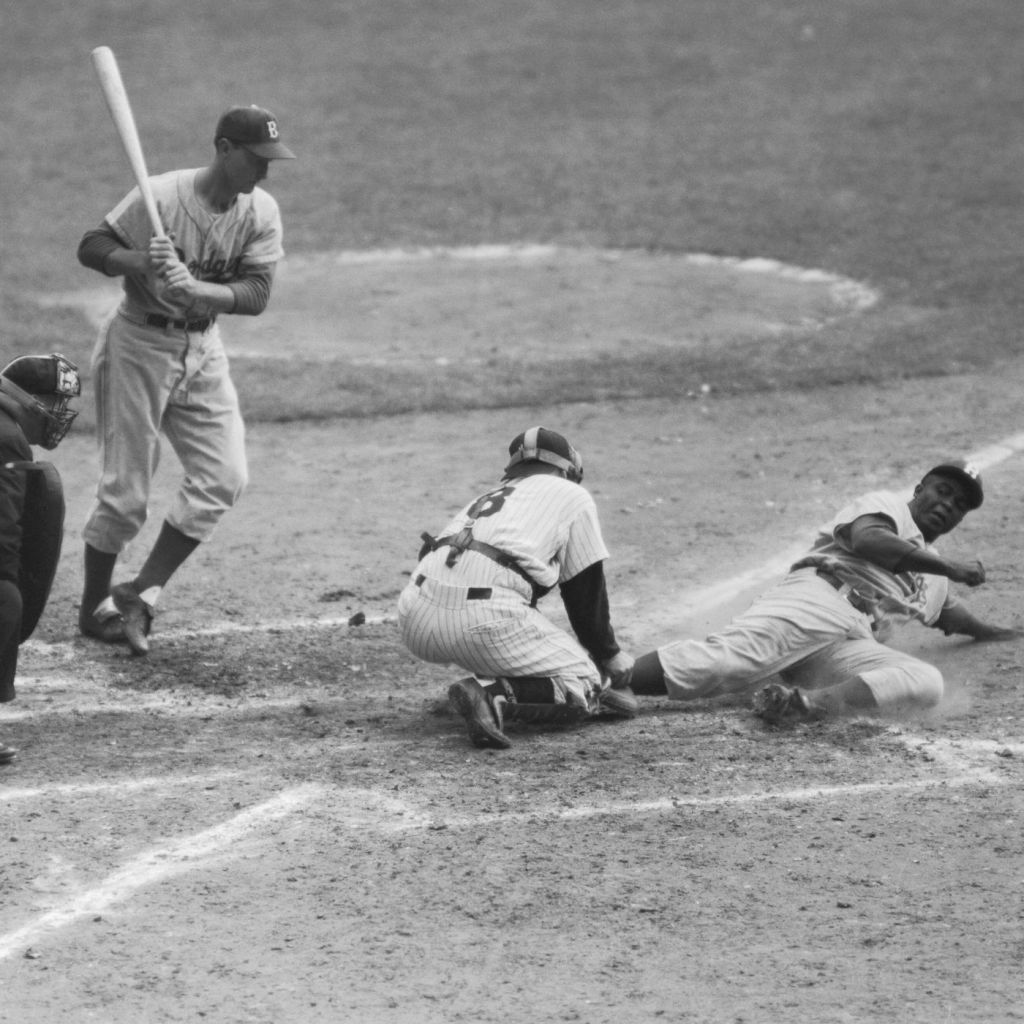
Jackie Robinson was on third base in the eighth inning of game one. There was one out and the Dodgers were down by two runs. The Dodgers had never beaten the Yankees in a World Series having lost 5 previous times. Whitey Ford was on the mound for New York and of course Yogi Berra was behind the plate. Robinson took off for home and as he slid into home Berra applied the tag. Umpire Bill Summers called Robinson safe. Berra did not agree. There is a huge picture of this moment in the Yogi Berra Museum in Montclair, New Jersey. According to Posnanski and Yogi’s family whenever Berra passes the photo, no matter what he is talking about, he points to the photo and declares “safe”.

According to Posnanski there are three reasons why people still talk about this play. First, it involved two of the games’ most iconic players, Robinson and Berra. Second, it involved one of baseball’s greatest rivalries, the Dodgers and the Yankees. Third, we still don’t know whether Robinson was safe or out.

I’ll let Posnanski take over from here.

               Oh, you might think you know whether Robinson was safe or out. Lots of people think they know. Robinson was on third, a nice-sized lead and he was watching Ford closely. He then took small hops and took off for the plate while Ford was in his windup. Ford’s pitch beat him there, Yogi caught it with his left foot on home plate, he reached down with both his glove and right hand and tried to tag Robinson’s right foot just before it touched home.

               Out? Safe? Home plate umpire Bill Summers did not hesitate. He ruled safe. Berra was sure he’d blown the call, so sure that he stood up and tore off his mask and began screaming at Summers like he never had at an umpire and never would again. Summers just kept stretching his arms, again and again, a repeat of his safe call, and then turned his back on Berra.

               People have been arguing ever since.

There is one surviving film of the play. The replay shows everything… and nothing at all. It is a Rorschach replay. You will see in it exactly what you want. If you want to see Robinson out, he’s out. If you want to see him safe, he’s safe.

“It was bush stuff,” Berra shouted to reporters after the game. “It was showboat strategy, stealing home when you’re two runs behind like that. It was a bad play.”

               Reporters raced over to Robinson for a response.

               “The only thing bush about it,” Robinson replied, “was Berra’s tag.

               Reporters raced back to Berra for his response to the response.

               “He was out,” Berra said. “The call was blown. It was the wrong play, and he was out.”

               Back to Robinson.

               “Tell him to worry about himself,” Robinson said. “He didn’t tag me until after I crossed.”

               Back and forth. The Yankees, as you know, won the game. But the Dodgers ended up winning that World Series—they finally beat the Yankees—and Jackie Robinson’s stolen base became a symbol of that victory.

And here’s the best part of the story. I’ll let Posnanski continue.

Jackie Robinson died in 1972. And for the next 40-plus years, Yogi Berra would often find himself at a banquet or celebration or gathering with Jackie’s widow Rachel Robinson.

               They always greeted each other the same way.

               “Safe,” Rachel would say.

               “Out,” Yogi would say.               

And then the two would laugh and hug.

References: Why We Love Baseball A History in 50 Moments by Joe Posnanski

The Baseball Almanac

Yogi Berra Museum & Learning Center 8 Yogi Berra Drive Little Falls, NJ

Lou Gehrig Day Yankee Stadium, July 4, 1939

As we celebrate our nation’s Independence Day those of us who are endeared to baseball, our national pastime, also know that this date has another profound significance. It was 85 years ago this day that Lou Gehrig, the Hall-of -Fame first baseman, gave his farewell speech at Yankee Stadium sadly ending his stellar 17-year career. It is beyond my ability to describe the poignancy of Gehrig’s words so I will leave that to one of my favorite poets, Ed Romond and his wonderful poem:

Lou Gehrig Day Yankee Stadium, July 4, 1939

He was scared and did not want to speak to 62,000 people.

Maybe he felt facing death was enough to endure but

they kept calling his name till he stepped up to the mic

and gave 278 words of thank you and goodbye. His body trembled

as he spoke with the voice of a dying man still strong enough

to unlock his heart before thousands and let them all come in.

The poem was dedicated to BJ Ward. You can find this poem and many other excellent poems in:

Home Team Poems About Baseball

By Edwin Romond

Published by Grayson Books