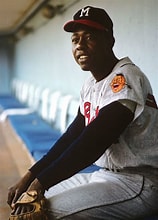
A few weeks back I was fortunate to attend a wonderful event by The Carriage House Poetry Series in my town of Fanwood. The event featured readings by Edwin Romond the author of five collections of poetry. I had recently finished some research on Hank Aaron and a post that you may have read about the anniversary of his momentous achievement breaking Babe Ruth’s home run record. One of Ed’s poems was about that very event and he gave me permission to post his wonderful poem here.
BreakingIn memory of Hank Aaron (1934-2021)
1953 in Washington, DC Hank Aaron could see the Capitol Dome, glistening symbol of freedom, through windows of the cafe where he and his black teammates had just finished breakfast. After the waitress took their plates to the kitchen he heard glassware breaking, smashed so no one else would use them, so no one else would eat from plates that had touched the forks that had been in the mouths of black American men.
But Hank would answer hate with excellence playing baseball with graceful greatness through the 50’s, 60’s and, on one Atlanta night in ’74, did his own breaking, smashing #715, one more homer than Babe Ruth whose record stood unshattered for five decades. And in 2002 Aaron returned to Washington, DC this time to stand in the White House, just blocks from that cafe, to receive the “Presidential Medal of Freedom” from George W. Bush and as the East Room audience stood and cheered, Hank’s face broke into a grand slam smile before sitting down to dine on the First Family china.
This poem can be found in Ed Romond’s award-winning poetry collection “Man at the Railing” published by NQY Bookshttp://www.nyq.org
It was fifty years ago today that Hammerin’ Hank Aaron hit his 715th home run surpassing Babe Ruth’s long-standing record for lifetime home runs. On that cool early April afternoon in 1974 in Atlanta Stadium Aaron blasted a deep fly ball over the left-field wall against LA Dodger lefty Al Downing and became Major League Baseball’s all-time home run king.
I remember watching the momentous event with a small group of my college buddies. Yes, we cut classes to watch it. We had our priorities in order, although we were thankful that Hank came through that day saving us any further conflicts with our priorities.
Growing up a Yankee fan in the northeast in the 50’s, 60’s and 70’s I didn’t get to see Aaron on a regular basis. But I’ll never forget attending a mid-60’s game at Shea Stadium, Mets against the Braves. We had great seats in the loge section courtesy of the corporate perks of my buddy’s father. I distinctly remember being in awe of Aaron. He had an almost regal presence as he slowly ambled up to the plate. He had an unusual habit of carrying his helmet to home plate and then slowly donning it over his cloth hat as he settled into the batter’s box. He would then take one or two practice swings flexing his powerful wrists. Aaron was known for his powerful wrists. (As kids and wannabe ball players we actually did Hank Aaron inspired exercises to strengthen our wrists.) Then with a flick of those wrists Aaron treated us with a long home run. One of his 755 lifetime home runs. Most of us at that time thought it would be Mickey Mantle or Willie Mays who would pass the legendary Babe. But looking back on it, if my college self could tell my teenage self, “Hey, Hammerin’ Hank just passed the Babe,” my teenage self would have said, “Wow! Hey, I knew he could do it!”
Hank Aaron’s 23-year Major League Baseball career spanned three decades playing for only two cities, Milwaukee, and Atlanta and only two teams the Braves for 21 years and his final two years in 1975-76 with the Milwaukee Brewers.
He is the all-time leader in RBI’s, extra base hits, and total bases. He is second in lifetime home runs to Barry Bonds and second in at bats to Pete Rose. During his Hall of Fame career, he led the National League in home runs four times, RBI’s four times and batting average twice.
In 1957 he won the National League MVP award while leading the Braves to a World Championship over the New York Yankees.
Hank Aaron passed away in 2021 at the age of 86.
Many regard Aaron as the best professional baseball player of all time.
One of my favorite blogs is Archived Innings by Precious Sanders. While recently going through some past posts on Archived Innings I came upon a post honoring Buck O’Neil the talented Negro League ball player who had just been elected to the Baseball Hall of Fame. I have always been a fan of Buck O’Neil since I first learned about him watching Ken Burns’ documentary series Baseball. O’Neil was interviewed in the documentary and his stories about playing in the Negro Leagues were both enlightening and entertaining. He had such a warm and ingratiating personality I became an instant fan.
O’Neil was born in Carrabelle Florida in 1911 and became a steady if not spectacular first baseman for the Kansas City Monarchs, one of the best teams in the Negro Leagues. He had a lifetime batting average of .311. After his playing days were over, he became the first African American to coach in the Major Leagues. He was instrumental in the establishment of the Negro Leagues Baseball Museum in Kansas City, Missouri.
For his on-field accomplishments and his extraordinary contributions to the game of baseball O’Neil was posthumously elected to the Baseball Hall of Fame in 2022. The following video is a round table discussion about that long overdue event. The remarkable panel includes Bob Kendricks curator of the Negro Leagues Museum, filmmaker Ken Burns, writer Joe Posnanski, sports announcer Bob Costa and former Major League pitching star CC Sabathia. It is a wide-ranging discussion that covers much of O’Neil’s inspiring life story, the Negro Leagues, and the eventual integration of Major League Baseball.
I hope you’ll take the time to click on the discussion and watch it in full. I do caution however that the discussion starts off slowly. The first fifteen minutes consists of long-drawn-out praise of O’Neil which, though justified, becomes a bit repetitious. There is also too much discussion about the delay in finally inducting O’Neil. But once you get by that the discussion is thoughtful, insightful, and entertaining in which the commentators bring to life a truly fascinating and vitally important slice of American History.
(As the dreary days of winter drag on and Opening Day still seems so far away, I have found one antidote for these doldrums is to check out Gary Livacari’s excellent blog Baseball History Comes Alive. While doing so I came upon Gary’s fine retelling of this timeless baseball tale. I hope you enjoy it as much as I did.)
“I’ll knock a homer for Wednesday’s game. Babe Ruth” –Inscription on baseball scrawled by Babe Ruth during the 1926 World Series and given to little Johnny Sylvester, recovering from a near-fatal illness.
One of baseball’s most enduring legends occurred during the 1926 World Series. Of course it had to involve none other than the great Bambino himself. We’re all aware the Babe had his share of personal shortcomings (and don’t we all!); but when there was a kid in need, no one was more likely to come through in a big way than the Babe.
The Babe’s Famous Promise
The ball signed by Babe Ruth with his promise to Johnny Sylvester to hit a home run for him.
In 1926, little Yankee fan Johnny Sylvester was just 11 years old, recuperating from a horseback riding accident that resulted in a serious injury. He was hospitalized near his home in Essex Falls, New Jersey. The prognosis wasn’t good. The Yankees got wind of Johnny’s condition, and so during a rain delay in Game Three of the World Series in St. Louis, a few ball players signed a baseball just for Johnny. Babe Ruth inscribed more than just his signature, though. He penned his famous promise:
“I’ll knock a homer for you in Wednesday’s game” Babe Ruth
Babe visits the ailing Johnny Sylvester in the hospital.
In the classic photo above, we see the Babe and little Johnny together. Johnny still has a bandage on his forehead from his horseback riding injury. Thanks again to Don Stokes for another super colorization which really helps bring the story to life.
The Bambino Delivers…
On Wednesday, October 6, 1926 – Game Four of the series, a 10-5 Yankee victory – the Babe delivered on his promise…and then some! Amazingly, he didn’t hit just one homer, he hit three. On the day after Game Seven, Oct. 11, Ruth personally visited Johnny Sylvester in the hospital in Essex Falls.
…And Johnny Miraculously Recovers!
And sure enough, something miraculous happened: Against all odds, Johnny’s health gradually started to improve. According to Andrew Lilley, Johnny’s great-nephew, the visit from the Babe changed everything:
“Babe Ruth’s home runs and his visit helped Johnny find the will to survive.”
On Dec. 16, 1926, Ruth penned another letter to the boy (shown at right, in Babe’s distinctive, florid handwriting), inquiring about his recovery and inviting him to Yankee Stadium during the 1927 season “to help win another pennant.”
Johnny didn’t just survive…he thrived. He went on to graduate from Yale University in 1937, and later became a successful business owner and much-beloved family man. He even served in the Navy during World War II, rising to the rank of lieutenant. All because the Babe saved his life…or so the story goes!
Life Turns Full Circle!
In 1947, Johnny Sylvester visits an ailing Babe Ruth.
Fast forward to 1947. The situation had now completely reversed. Now it was Babe Ruth who was ailing and it was Johnny Sylvester’s turn to repay the man who had come to his bedside when he was gravely ill. As Andrew Lilley described the scene:
“The story had come full circle at this point. Here was the kid all grown up going back to the Babe and showing the same generosity to his hero, just as the Babe showed him all those years ago.”
Reading about this reunion 75 years later, it’s still hard not to shed a tear…
Ruth wasn’t the only sports celebrity to reach out to the ailing boy. “Big Bill” Tilden, one of the greatest tennis players of all time, sent him an autographed tennis racquet. Hall-of-Fame halfback Red Grange sent a letter and an autographed football. Baseball Hall-of-Famer Rogers Hornsby, in a rare show of compassion, was another famous athlete who sent little Johnny a letter. Of course, none of these other displays of concern did as much for little Johnny’s recovery as the Babe’s fulfilled promise and later visit.
Forty Years Later, Johnny Sylvester Is Found!
Johnny Sylvester at the time of his graduation from Yale in 1939
In 1986 – the 40th Anniversary of the Johnny Sylvester story – the Babe Ruth Museum tried to investigate the story for authenticity. The museum eventually tracked down the real Johnny Sylvester, finding him as a retired banker living in Connecticut. When asked for some proof that these events actually happened, Mr. Sylvester produced the baseball with Babe’s handwriting and signature. The ball said, “I’ll knock a homer for Wednesday’s game. Babe Ruth.” The ball is now on display in the Babe Ruth Museum in Baltimore along with the other artifacts in “The Little Johnny Sylvester Collection.” It’s been on loan to the Babe Ruth Museum for 36 years.
The Babe Ruth Museum located Johnny Sylvester in 1986.
But Is the Story True?
Is this heartwarming story completely true, or has it been embellished? Was the whole thing a hoax? Maybe we’re falling for a sappy publicity stunt dreamt up by Babe Ruth’s ubiquitous agent and “image-maker,” Christy Walsh. It certainly has that ring to it.
If so, it was highly successful. The publicity was priceless for Babe Ruth’s image. Years later when asked about the incident, Ruth is purported to have blurted out, “Who the hell is Johnny Sylvester?”
True or not, it remains one of the most timeless anecdotes in all of baseball lore and is one of the wonderful stories contributing to the endearing legacy of the great Bambino, Babe Ruth. Sadly,Johnny Sylvester passed away on January 6, 1990 at age 74 while residing in Garden City, New York.
Gary Livacari
Subscribe to our website, “Baseball History Comes Alive!” with over 1200 fully categorized baseball essays and photo galleries, now closing in on the one million hits mark with 899K hits and over 700 subscribers: www.baseballhistorycomesalive.com
For the first time in their 63-year history the Texas Rangers have won the World Series. Last night the Rangers beat the scrappy Arizona Diamondbacks 5-0 to win the 2023 Series four games to one. The Rangers’ fan base suffered through six straight losing seasons prior to this year when their team jumped out to a great start but eventually limped into the post season with a wild card spot. Texas never looked back winning a record 11 road games and forging past the Tampa Bay Rays, the Baltimore Orioles, and the defending champion Houston Astros on their way to the World Series.
The Texas Rangers are a team full of young talented players and some high-priced free agents who all contributed to their historic victory. Corey Seager the star shortstop led the Rangers, earning his second World Series MVP as only the fourth player in MLB history to do so joining Sandy Koufax, Bob Gibson, and Reggie Jackson in this elite group. Even without their best post season performer Adolis Garcia, who was out with an injury, the Rangers prevailed with solid hitting by Marcus Semien, Mitch Garver and Evan Carter. Nathan Eovaldi dominated on the mound holding Arizona in check on his way to his record-tying fifth post-season victory. But it was the acquisition of Bruce Bochy that was the difference maker. Bochy the longtime crafty manager earned his fourth World Series title having accomplished the feat three previous times at the helm of the San Francisco Giants.
Series MVP Corey Seager
It was however a long tortuous road for the Texas Ranger franchise that began as the new Washington Senators in the American League expansion of 1961. The old Senators moved to Minnesota becoming the Twins and having success winning the AL pennant three times and the World Series twice. The new Washington Senators however were so bad that they had to flee town and move to Arlington Texas after the 1971 season where they became the Texas Rangers. Unfortunately, the franchise continued its tradition of futility for 25 more years before finally making it to the post season in 1996. The late 1990’s Rangers were a powerful team led by Juan Gonzalez and Ivan Rodriguez, but their post seasons were ended each time, 1996, 1998 and 1999 by my mighty New York Yankees who won five out of six American League pennants during this time frame.
The Rangers again re-emerged as a force in the American League under the leadership of manager Ron Washington winning the pennant two years in a row in 2010 and 2011. They lost the World Series without much of a fight to the San Francisco Giants in 2010, four games to one. But it was in the 2011 World Series that Ranger fans suffered their most excruciating experience. Ahead in the series to the St. Louis Cardinals three games to two, the Rangers needed just one more win to secure the championship. And with a 7-5 lead going into the bottom of the ninth they needed only three more outs. Worse yet they still led 7-5 with two outs and two strikes on Cardinal third baseman David Freese with their lights-out closer Neftali Feliz on the mound. But Freese lined a game-tying triple to right field past Ranger outfielder Nelson Cruz who was playing too shallow. The game then entered extra innings. In the top of the tenth a banged-up Josh Hamilton found the determination to hit a go-ahead two-run homer for Texas and once again the Rangers were three outs away from their first championship. But it got even worse. For the second time the Cardinals were down to their last strike before Lance Berkman laced a single to center to once again tie the game. Never in World Series history has a team twice been one out away from victory and failed to seal the deal as the Rangers did in that fateful game six. I remember watching that game on TV in complete disbelief; enjoying the tremendous drama as a baseball fan and being relieved that I was not a Texas Ranger fan knowing the anguish they must have felt. The Rangers’ arch nemesis Freese finished off the debacle with a leadoff walk-off home run in the bottom of the eleventh. Just to add salt to the wounds Freese said afterward he was just trying to walk and when what he thought was ball four was called a strike he reluctantly returned to the batter’s box and promptly hit the next pitch out of the park putting a dagger into the heart of every Rangers fan.
The Rangers went down meekly 6-2 in game seven and the 2011 championship, once in their grasp, slipped away.
So it was that last night was a time for glorious redemption for the Texas Rangers who had struggled for so many years and had been so close and have now finally made it to the top.
Congratulations to the Texas Rangers and all their devoted fans. You have waited a long time and victory is finally yours. Enjoy it.
References: wikipedia.org, and A History of the World Series; The Grandest Stage by Tyler Kepner
For the first time in twenty-two years the Arizona Diamondbacks are back in the World Series. In 2001 the Diamondbacks beat the New York Yankees four games to three and what a doozy of a series it was. Twice is game four and five the Yankees were down to their final out before tying the game with a dramatic home run. And both times the home runs were hit off Arizona’s ace reliever Byung-Hyung Kim. Each game was then won by the Yanks in extra inning.
But it was game seven that was a real masterpiece. It was the only time in World Series history where the trailing team came back to win game seven in their final at bat.
That game is featured in Chapter 15 of my book Grandpa Gordy’s Greatest World Series Games. In the book Grandpa Gordy, a retired sportswriter who covered baseball for years, gives a unique retelling of the dramatic game to his young grandkids Michael and Jessica. Here is an excerpt for my book.
“Okay little ones,” said Grandpa Gordy, “the Yankees as a result of their two, thrilling come-from-behind victories, were now leading in the series three games to two and needed one more victory to win their 27th World Championship. That would not be easy because lying in wait in Arizona were those two nasty superstar starters Randy Johnson and Curt Schilling. After all the tension of the previous two games, game six was a laugher as Randy Johnson glided to a 15-2 victory. That set the stage for game seven, which was one of the most exciting World Series games in history.”
Grandpa Gordy continued. “Once again, we had ourselves a pitching duel. Roger “the Rocket” Clemens was on the hill for the Yanks and Curt Schilling was back, starting his third game for Arizona. Both were on the top of their games. Zona ended a long string of zeroes with a run in the sixth that was matched by the Yankees with a run in the top of the seventh. Then in the top of the eighth one of the heroes of game five, Alphonso Soriano, came to the plate against the mighty Schilling. Soriano swings. There’s a high fly ball, deep to left. It is high! It is far! It is gone!! A home run for Soriano and the Yankees have a 2-1 lead. Six more outs and the New York Yankees can win their 27th World Championship. And coming in to pitch in the bottom of the eighth was the magnificent Mariano Rivera, who has an incredible record of 23-consecutive post-season saves! Rivera then promptly strikes out the side in the eighth and the Yankee fans only need to count the outs because they know, with Mariano the Magnificent, it is automatic. But wait. The D-Backs are not buying the Mariano mystique. Mark Grace leads off the bottom of the ninth with a base hit. Damon Miller comes up and bunts trying to move the tying run to second. Rivera fields the ball and instead of getting the easy out at first, he fires to second to cut down the lead runner. But oh my! The throw sails wide and the runner is safe! First and second nobody out. Another bunt. This time by pinch-hitter Jay Bell. Rivera once again fields it and once again goes for the difficult force out, but this time he nails the runner at third for the first out. That brings the D-Backs’ scrappy shortstop Tony Womack to the plate. Two more outs are all Mariano the Magnificent needs. But wait. The pitch to Womack is a cutter in on his hands. He swings. He loops the ball down the right field line. Base hit! Cummings, who ran for Miller, is rounding third. He scores! The game is tied! Rivera then pitches too far inside to Craig Counsell and hits him, and the bases are now loaded for Arizona’s best hitter, Luis “Gonzo” Gonzalez.”
“Joe Torre signals for his infielder and outfielders to come in and play shallow. Just moments ago, New York was in the driver’s seat with the lead. Now, with only one out, the play must be at the plate. Unlike the situation in game five when Torre left the infield back with one out and the winning run on third, this time the D-Backs are the home team and if a run scores it’s all over. So, he must play the infield in. “Gonzo” who hit .325 with 57 home runs and 142 RBIs this season steps to the plate. The Magnificent Mariano, looking supremely confident, checks the sign from his catcher. The pitch. Another cutter, Rivera’s best pitch. In on Gonzo’s hands. He swings. He bloops the ball off the handle right toward shortstop. But wait! Where is Derek Jeter the Yankee shortstop? He is playing way in for a play at the plate. He turns to go back. He can’t get it! BASE HIT!!! Bell scores from third! The Diamondbacks win!”
“Wow what a finish,” Michael said as Grandpa Gordy finally sat down. He was completely out of breath.
“Well, I guess that poor Mr. Kim who allowed the Yankees to come back in those other games doesn’t have to feel bad anymore,” Jessica said.
“Well, you’re right little one,” Grandpa Gordy said. “And that was the first ever World Series Championship for the Arizona Diamondbacks as they beat the mighty Yankees 3-2 and won the series four games to three. So that’s all for tonight little ones. Good night and sweet dreams.”
It will be interesting to see if the 2023 World Series can match the excitement of 2001. We will soon see.
Check out more of my book Grandpa Gordy’s Greatest World Series Games at your local bookstore or on Amazon.
As Jim Plamer celebrates his 78th birthday today he, like all his fellow Baltimore Orioles fans, share the disappointment of a super season that ended too quickly. Though the Orioles made it to the playoffs for the first time since 2016 their failure to reach the World Series, despite having the best record in the American League, is hard to accept. Nonetheless it is a good time to recognize the achievements of their Hall of Fame hurler.
Since moving to Baltimore in 1954 the Orioles have made it to six World Series and have won half of them. Remarkably, Jim Palmer appeared in all six of them and he is the only pitcher in World Series history to record wins in three different decades.
Palmer’s first appearance in the World Series was a stunning success. In 1966, nine days before his 21st birthday, he faced off against the Los Angeles Dodgers’ stellar southpaw, Sandy Koufax in game two. The upstart Orioles had shocked the defending World Champion Dodgers with a 5-2 victory in the opener when the Robinson boys, Frank and Brooks, hit back-to-back home runs in the first inning against LA ace Don Drysdale. Even more remarkable, the unheralded reliever Moe Drabowsky pitched 6.2 scoreless innings to secure the victory. Surely Koufax would avenge that opening loss in game two. Afterall, Koufax was the premier pitcher in the majors after another fabulous season with 27 wins and a 1.73 ERA. But the young Palmer wasn’t fazed a bit and cruised to a 6-0 shutout aided by an astonishing six LA errors. Ironically Palmer became the youngest pitcher ever to record a shut out in the World Series on the very day of Hall of Famer Sandy Koufax’s last game. Koufax retired at the end of 1966 due to an arthritic left elbow.
Palmer would go on to record World Series victories against the Reds in 1970 and the Pirates in 1971. In the 18th year of his 19-year career Palmer pitched in relief against the Philadelphia Phillies in game three of the 1983 World Series. He entered the game in the fifth, pitched two shutout innings retiring four fellow future Hall of Famers, Joe Morgan, Tony Perez, Mike Schmidt, and Steve Carlton and earned the victory. Palmer wound up with a World Series record of 4-2 with a 3.20 ERA. For his career Palmer recorded 268 wins versus 152 losses and a 2.86 ERA. He won the American League Cy Young award three times in 1973, 1975 and 1976.
The Baltimore Orioles World Series appearances:
1966: won in four games against the Los Angeles Dodgers
1969: lost in five games against the New York Mets
1970: won in five games against the Cincinnati Reds
1971: lost in seven games against the Pittsburgh Pirates
1979: lost in seven games against the Pittsburgh Pirates
1983: won in five games against the Philadelphia Phillies
On a personal note: I’ll always remember Palmer for his high leg kick, rising fastball, sweeping curve and the way he dominated my Yankees in the late sixties and throughout the seventies. As an American League fan, I rooted for Palmer and the Orioles in those six World Series and was ecstatic with the way he handled the Dodgers in 1966. The Orioles were big underdogs that year and nobody expected them to matchup against the tremendous LA pitching. But when they did, with a four-game sweep, I was nothing but smiles.
References:
Baseball Almanac
Baseball-Reference.com
A History of the World Series, The Grandest Stage by Tyler Kepner
This year marks the 25th anniversary of what could be regarded as the best baseball team of all time, the 1998 New York Yankees. In his new book The Inside Story of the Greatest Baseball Team Ever The 1998Yankees author Jack Curry makes a convincing case. If you are a baseball fan and you haven’t read Curry’s book you should. If you are a Yankee fan you must.
As a long time Yankee fan, I didn’t need much convincing, though I had to do some research on the 1961 Yankees, the team I grew up watching, to make sure Curry’s argument held up. And it does. It also holds up against all the other great teams in baseball history. By all means get Curry’s informative and enjoyable book to see his complete argument. For my blog here I will focus in on what I believe are the most important facets support the conclusion that the 1998 New York Yankees are the best team ever.
First, to set some parameters: I am not talking about the best collection of players, nor am I measuring the team over a course of several seasons. I am not talking about a dynasty team (though the 1998 Yankees were part of a dynasty team that won four World Championships and five AL Pennants over the course of 6 years; 1996-2001). I’m talking about a team having the greatest single season ever. And for this I believe there is no doubt.
The two most important categories to consider are wins, of course, and winning the World Series. A lesser category would be winning percentage.
Let’s start with winning percentage as the fairest way to differentiate a really good team from a great team. Afterall, winning percentage accurately accounts for the significance of the different lengths of seasons from baseball’s different eras. Specifically, the change from 154 games to 162 games which occurred in 1961. Using .700 as the dividing line we find nine teams in modern baseball history (since the beginning of the World Series in 1903) that had a regular season winning percentage over .700.
Here is the list:
1906 Chicago Cubs .763 W 116 L 36
1909 Pittsburgh Pirates .724 110-42
1954 Cleveland Indians .721 111-43
2001 Seattle Mariners .716 116-46
1927 NY Yankees .714 110-44
1998 NY Yankees .704 114-48
1931 Philadelphia Athletics .704 107-45
1907 Chicago Cubs .704 107-45
1939 NY Yankees .702 106-45
Of these nine teams four can be eliminated because despite their fantastic regular season they failed to win the World Series. In my book you can’t be considered the best team ever if you couldn’t even win the championship. So, despite having the most regular season wins at 116 both the 1906 Cubs and the 2001 Mariners are both eliminated because they failed to win the World Series. The Cubs lost to their crosstown rivals the White Sox and the Mariners failed to even make it to the World Series, losing in the playoffs to the Yankees. The 1954 Indians and the 1931 Athletics also failed to win the World Series so that leaves us with five teams remaining.
Honus Wagner
This is a tough call, but I’m going to eliminate the 1909 Honus Wagner led Pittsburgh Pirates because they had a difficult time in the World Series needing seven games to beat Ty Cobb’s Detroit Tigers. The remaining four teams all went undefeated in the World Series although the 1907 Cubs took five games to defeat the Tigers with one game ending in a tie.
To differentiate the four remaining teams, I will use a rough metric from the Baseball Almanac where the teams’ yearly stats are compiled showing the leaders in ten offensive categories such as batting average and runs and eight pitching categories such as ERA and strikeouts. The best team here is the 1927 Yankees who led in 12 categories, the 1939 Yankees 10 categories, the 1998 Yankees eight categories, and the 1907 Cubs only five categories. Using this metric, I will give the 1907 Cubs with the lowest score the boot leaving the three Yankee teams as the finalists. I know, I’m a Yankee fan, but what can I say, the stats don’t lie.
The Baseball Almanac’s metric has however a significant flaw. It can’t account for a major difference between the two eras; before and after the leagues expanded. The 1998 Yankees competed against twice as many teams as the 1927 and 1939 Yankees, thus it was much more difficult to lead in a category. But we can use that metric to compare the 1927 Yanks and the 1939 Yanks, and we can give Babe Ruth’s Yanks the nod over Joe DiMaggio’s lower scoring Yanks, thus eliminating the 1939 Yanks and leaving just the 1998 Yankees and the 1927 Yankees in the competition.
Lou Gehrig and Babe Ruth
So, comparing two teams from two different eras can be difficult but it also can be fun. I know growing up and watching the 1961 Yankees every day; as the season went on there were discussions as to whether the 1961 Yankees with the M&M Boys, Mantle and Maris, could compare with Ruth and Lou Gehrig and the Murders Row of 1927. At that time the 1927 Yankees were considered the best team of all-time, at least in my neck of the woods and without any advanced metrics. The ’27 Yankees certainly had all the power and glitz with two of the all-time greats in their lineup, Ruth, and Gehrig. The ’98 Yankees didn’t lack in star power with two emerging Hall of Famers, Derek Jeter, and Mariano Rivera on their roster. They also had the AL batting champ Bernie Williams and a solid pitching staff with borderline Hall of Famer David Cone, plus Andy Pettitte and David Wells. As a result, I must contend that it all comes down to wins. The 1998 Yankees, winning 114 regular season games and 11 post season games for a total of 125 wins, had more wins than any other team ever, and 11 more than the 1927 Yankees. Now you could argue that if the 1927 Yankees played 23 more games, they probably could have won at least 12 of them. The problem is, that would be mere speculation and there is no way to know, and we will never know. There is no other way around it, the 1998 New York Yankees, winner of 125 games, are simply the best.
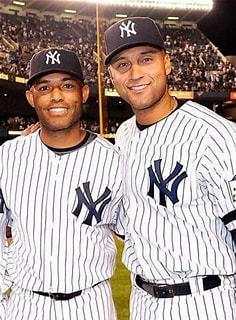
Mariano Rivera and Derek Jeter
A couple of footnotes.
One reason the 1998 New York Yankees do not get the credit they deserve is that the year 1998 in baseball is primarily remembered for the incredible home run competition between Mark McGwire and Sammy Sosa. As the Yankees dominated the American League with record setting precision, McGwire and Sosa were captivating the entire nation with their quest to break Roger Maris’s single-season home run record. Prior to any suspicions of PED’s they were America’s sports heroes as McGwire blew by Ruth and Maris with 70 home runs and Sosa doing the same with 66.
Curry’s book also mentions a comparison of the greatest teams done by the website FiveThirtyEight using a complex set of metrics. FiveThirtyEight lists the 1939 Yankees as number one, kudos to Joe D, but the ’39 Yanks had the lowest winning percentage of our nine .700 teams, and it somehow rates the 1906 Cubs number two despite losing the World Series. For those reasons I believe their metrics are flawed. They even dropped our 1998 Yankees to fifth, behind the ‘27 Yankees and the ’09 Pirates which I certainly find unjustifiable.
References:
The Inside Story of the Greatest Baseball Team Ever The 1998 Yankees by Jack Curry
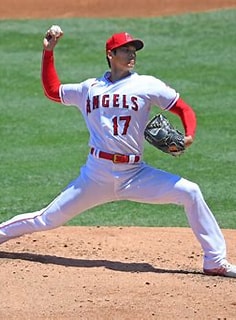
On Thursday night Shohei Ohtani had an historic performance on the mound and at the plate by pitching a shutout and hitting two home runs on the same day.
My friend Al Zevin, who is an amateur baseball historian, did some research and discovered that the remarkable feat occurred only four other times in modern baseball history.
2023 Shohei Ohtani vs. Detroit
1971 Sonny Siebert vs. Boston
1971 Rick Wise vs. Cincinnati
1962 Pedro Ramos vs. Baltimore
1961 Milt Pappas vs. Minnesota
As a big Ohtani fan, I then boastfully claimed to Al that Ohtani has probably hit more home runs this year than those four pitchers combined for their entire careers.
I did some research and well…I was wrong.
Here’s what I found. All four pitchers, Siebert, Wise, Ramos and Pappas are what we might have called good hitting pitchers in that they did hit an occasional home run. So, it was not merely a fluke that they hit two home runs in a game that they pitched a shutout. As a matter of fact, both Sonny Siebert and Rick Wise each hit 6 home runs in the 1971 season. Here’s how the career home runs stack up for these four pitchers.
Sonny Siebert: 12 years, 18 home runs
Rick Wise: 18 years, 15 home runs
Pedro Ramos: 15 years, 15 home runs
Milt Pappas: 17 years, 20 home runs
So, their total career home runs of 68 are more than twice that of Ohtani’s current number 38.
This of course is a very arbitrary comparison but insightful none the less. (And aren’t these statistical comparison’s fun and part of the charm of baseball)? What we see here is that pitchers really could hit back when they were allowed to. The four mentioned here could all be described as having occasional power though their lifetime batting averages were dreadful. Wise .195, Siebert .173, Ramos .155, and Pappas .123. But yes, they had occasional power and averaged about 5 home runs per season. They all had solid career pitching stats with only Ramos clocking in with a below .500 won-loss record and plus 4.00 ERA. They may even have had more hitting success if there was a DH back when they pitched, though Rick Wise pitched half his career in the DH era.
One other note: these four pitchers also accomplished the two-home run-shutout feat in the same game. Ohtani needed a double-header, pitching the shutout in the first game and blasting two homers in the second.
None of this though can in any way diminish from Ohtani’s incredible accomplishments. Right now, he leads both leagues in home runs, he’s second in RBI’s, third in strikeouts and two off the pace in wins. He is having a truly remarkable season and should continue making history.
References: Al Zevin, Jeff Robinson, ESPN, Baseball-reference.com
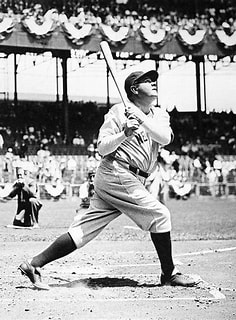
It was a century ago that Babe Ruth was in the middle of what can be considered his best season ever and one of the best in Major League Baseball history.
We all know the basics of the Babe Ruth story—the son of a saloon keeper, the rowdy youngster sent off to private school. The young man who could hit a baseball a mile and pitch darts with unmatched velocity. There were his early years with the Boston Red Sox where he pitched them to three World Series Championships and then began his conversion from outstanding pitcher to phenomenal hitter. And then the astonishing, fateful trade from the Sox to the New York Yankees in December 1919.
Ruth changed the sport with his sensational 54 home runs in 1920 as he became a full-time outfielder and the game’s first superstar slugger. He was even better in 1921 when he hit 59 home runs and led the Yankees to their first ever American League pennant. With his unmatched power and fun-loving personality Ruth was now the most popular and dominant player in baseball. The country had just come out of the dark days of a world war and baseball was recovering from the “black sox scandal” of 1919. The bombastic Babe was just the tonic the country yearned for, and baseball needed so desperately.
Ruth hit an unfathomable total of 113 home runs over those first two years with the Yanks and single-handedly changed baseball from a game of station-to-station strategy to one of crowd pleasing, majestic moon shots. But his career had a setback in 1922 when he missed the first month due to a suspension and more games due to an altercation with a fan. He missed a total of forty-two games, and his production was way lower than was expected of him. Although the Yankees once again won the pennant, the New York Giants for the second straight time, beat the Yanks in the World Series. The Babe was a huge disappointment for his growing fan base as he batted a miserable .118 against the Giants.
Determined to make amends for his lackluster 1922 season Ruth went on a tear in 1923. One hundred years ago this month Ruth was hitting .381. He ended July batting .390 with 24 home runs. In August he hit .500, going 40-for-80 and moved his average over .400 as he battled Harry Heilmann for the batting title. One notable change for Ruth was the opposition’s strategy to walk him constantly. Lou Gehrig was not yet a fixture in the Yankee lineup and Ruth lacked his protection, so it was common to give the Bambino a base on balls. One afternoon in June against Cleveland, the Babe doubled in his first at bat and was walked intentionally his next four times up. He walked an incredible 170 times that year—a record that stood for the rest of the 20th century and was only broken during the steroid era. Ruth eventually came in second in the batting race, though his .393 still stands as one of the highest ever for a power hitter eclipsed only by Ted Williams in 1941. Ruth completely dominated the AL in stats in 1923. He won the home run title with 41, was first in runs (151), total bases (399), RBIs (131), walks (170), on-base percentage (.545), and slugging percentage (.764). His on base plus slugging percentage was a scintillating 1.309. He was fourth in hits (205) and third in doubles (45). But his most incredible stat was one that we don’t hear much about. He reached base an astonishing 379 times. Think about it. In 152 games the big guy averaged being on base almost 2 ½ times per game! And that is a record that no amount of PED’s could overcome and still stands today.
Ruth continued his torrid hitting in the World Series as the Yankees once again faced the Giants. The Bambino blasted three home runs and batted .368 leading the Yankees to their first World Series Championship beating their cross-town rivals four games to two. This was also the year Yankee Stadium opened having been built because the Yanks, who were also playing in the Polo Grounds, were no longer welcome. Along with helping to bring the first championship to the new stadium Ruth christened the sparkling new venue with its first home run which he hit on opening day in April.
What makes this Ruth’s best season ever was his outstanding performance in the field. He was the American League’s best right fielder. The Babe is not often thought of as a great fielder, but he was a sound outfielder for most of his career and in 1923 he was at the top of his game leading all AL right fielders with a .973 fielding percentage. He also threw out 20 baserunners and had 378 putouts.
Babe Ruth would go on to have many stellar seasons and a Hall-of-Fame career but in 1923, one hundred years ago, he had his best season ever.
References: New York Yankee Seasons of Glory by William Hageman and Warren Wilbert and Baseball-reference.com






 Back Home With Baseball and Beyond
