Last Saturday I had the pleasure and privilege of meeting Dr. Lawrence D. Hogan at the Local Author Fair in the Fanwood Memorial Library.
Dr. Hogan is Professor of History Emeritus from Union County College in New Jersey where he taught African American History for 37 years. He is the author of A Black National NewsService: Claude Barnett and the Associated Negro Press, and The Forgotten History ofAfrican American Baseball, and principal author and editor of Shades Of Glory, published by National Geographic.
He is a delightful man to speak with and shared some interesting stories about his life studying baseball, particularly Black Baseball. He talked about the charms of long-forgotten Ruppert Stadium in Newark where the Newark Eagles played in the Negro National League and his long friendship with Eagle star Monte Irvin who eventually played for the New York Giants and Chicago Cubs. He told me about an interview he had with Yankee shortstop Tony Kubek for his latest book So Many Seasons in the Sun. He was gracious enough to buy a copy of my book Mickey Mantle’s Last Home Run and after reading the first few pages warmed my heart when he commented on his appreciation of the iconic Pulaski Skyway which is mentioned on page four.
circa 1950: Outfielder Monte Irvin #20 of the New York Giants poses for a portrait, crouching and holding a baseball bat, 1950s. Irvin played for the Giants from 1949-1955. He also played for the Negro National League before his eight years in the Majors. (Photo by Photo File/Getty Images)
Dr. Hogan is also the executive producer of Before You Can Say Jackie Robinson: BlackBaseball in America in the Era of the Color Line a documentary that is now available on You Tube. This engrossing and entertaining documentary features veteran Negro League players, places where they played, and fans who saw them play. It includes interviews with Max Manning, Larry Doby and a moving tribute to Ray Dandridge as he is finally recognized for his immense talent and is inducted into Baseball’s Hall of Fame. The documentary is part of a program that Dr. Hogan along with his friend Kevin Kane, offer to museums, libraries, historical societies, colleges and other venues.
Ray Dandridge was elected to the Baseball Hall of Fame in 1987
Now that we’ve had a little time to reflect on Saturday night’s classic World Series game, I can now say that the LA Dodgers 5-4 win in 11 innings against the Toronto Blues Jays in game seven of the 2025 World Series was one of the greatest World Series games ever, if not the greatest. But just to be sure I checked in with my good friend Grandpa Gordy who, as you know if you have read my book Grandpa Gordy’s Greatest World Series Games, is an expert on World Series games. This was our conversation.
“Well let me think. It was a pretty darn good game that’s for sure.”
Then I said, “well, it had all the ingredients to be one of the greatest games ever, filled with tremendous drama. “
“Got to agree with that. It was a seventh game. Don’t get any more dramatic than a seventh game.”
And I added, “and it was decided in the final inning.”
“Extra innings to boot. Now as I recall there were some pretty darn good extra inning-seventh games. The one way back in 1924 when the Washington Senators beat the New York Giants was a doozy. And it was in my book.”
“That’s right. I know and so was the 1991 Minnesota Twins’ 1-0 victory over the Braves.”
“Hey and don’t forget when the underrated Florida Marlins beat Cleveland in 1997.”
“That’s right. It went 11 innings.”
“In my book too. And there’s that classic game in 2016 when the Chicago Cubs ended their 108-year draught and finally won a World Series. That was another doozy.”
“I don’t remember that one from your book.”
“You wouldn’t because my book came out in 2002.”
“Sorry. I didn’t mean to be critical”
‘That’s okay. I’m working on my updated version.”
“So, Friday night the Blue Jays were only two outs away from winning the World Series when the Dodgers’ number nine hitter Miguel Rojas blasted a game-tying home run. Pretty dramatic.”
Miguel Rojas
“Well, that’s for sure but in 2001 the Yankees were only two outs away from victory with Hall of Fame closer Mariano Rivera on the mound when Arizona’s Tony Womack lashed a game-tying double.”
“Who?”
Tony Womack DIGITAL IMAGE Mandatory Credit: Jed Jacobsohn/ALLSPORT
“That’s right. You think Miguel Rojas was an unsung hero? Well, how about Tony Womack in the ninth inning of game seven against the Yanks!”
“Well, that’s true. But what about that incredible bottom of the ninth. The Blues Jays had the bases loaded, one out. The winning run ninety feet away and Rojas (again Rojas!) makes a backhanded stab at second base, stumbles, but still fires a laser to nail the Blue Jay runner at home by a millisecond. The Blue Jays literally lost the World Series by a millisecond! And then Andy Pages makes a sensational game-saving, World Series-saving catch in deep left-center field!”
“Yeah, hard to top that!”
“And then in the top of the 11th Will Smith hits the go-ahead home run.”
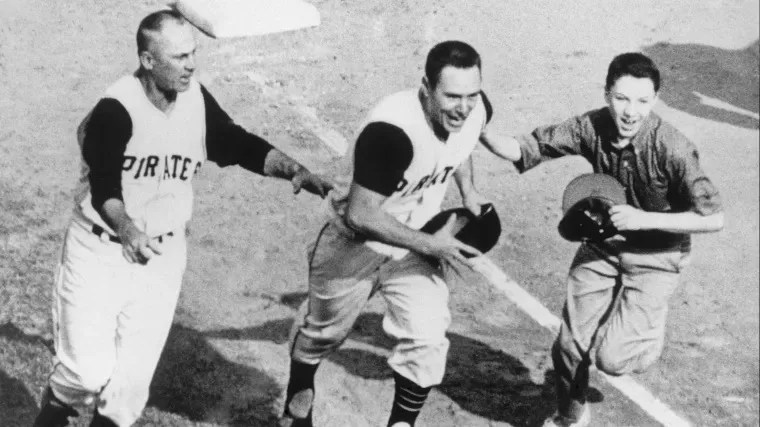
“That’s true but I’m sure you heard of that Bill Mazeroski fellow who hit the only walk-off, game-seven home run in World Series history way back in 1960 for the Pirates over the Yankees.”
“Yeah, you’re right about that. But what about Yoshi Yamamoto’s performance, pitching the final two innings in game seven after starting and winning game six.”
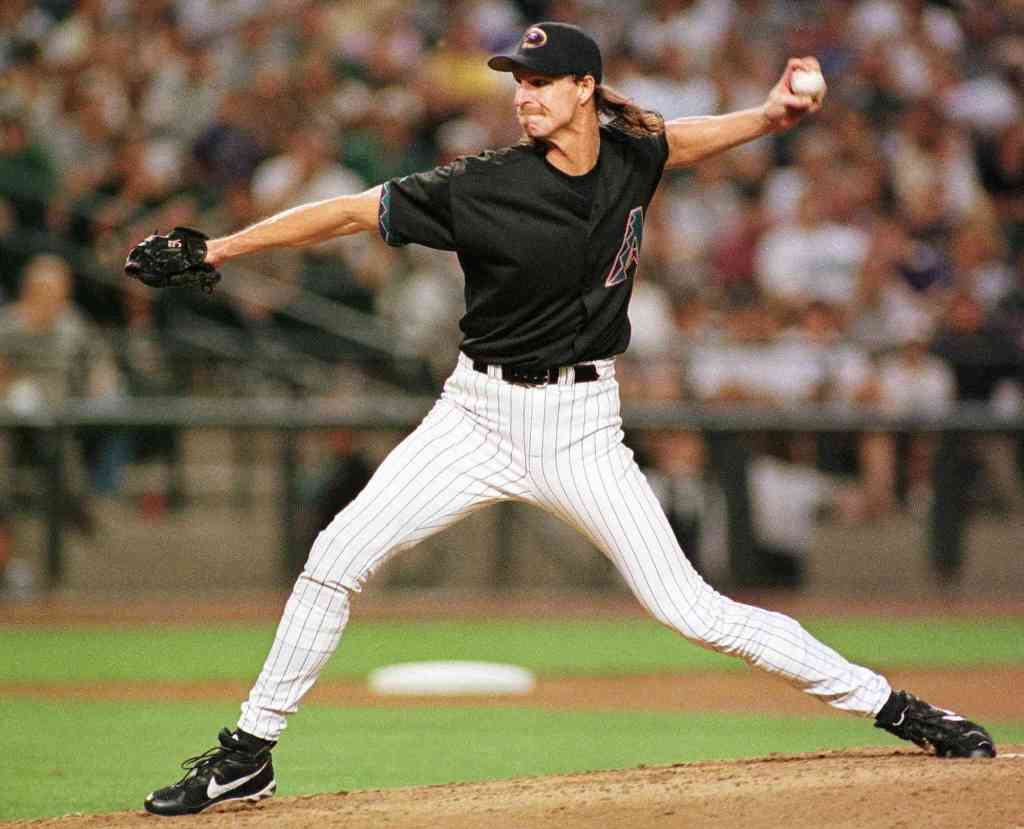
“Well, if I’m not mistaken that big ol’ scraggly-haired lefty Randy Johnson did the same thing against the Yanks in game six and game seven of the 2001 World Series.”
“Wow. That’s amazing. But what about the bottom of the 11th. The Blues Jays had first and third with only one out. The tying run was on third and the winning run on first.”
“Oh yeah. That was pretty incredible, but Kirk hit into a double play ending it.”
“A really nice clutch play but Mookie Betts.”
“No doubt about it. The defense in the entire Series was tremendous. But think about this.” Grandpa Gordy scratched his beard. “What if Kirk hit a gapper and that guy Madison Barger who was on first came flying around third and slid into home with the winning running, beating the throw by a millisecond. And Blue Jays have comeback and are the champs.”
“Oh yeah. That would have been truly sensational!”
“So if that happened there would have been no doubt that this was the greatest World Series game ever.”
“I guess we can agree on that.”
“Yep and that in a little over three months it’s “pitchers and catchers”.
As we get ready for tonight’s game three of the World Series between the Toronto Blue Jays and the Los Angeles Dodgers it’s a good time to take a trip back down memory lane to the last time the Blue Jays made it to the Series in 1993. In that Series, the Blue Jays against the Philadelphia Phillies, game six was one of the most memorable games in baseball history.
And if you haven’t learned about that game, you probably haven’t read my first book Grandpa Gordy’s Greatest World Series Games. It’s a great book for a baseball fan to read to your child or grandchild or just read it for yourself if you love the game. Chapter 13 entitled Game Six 1993 Big Joe, Lenny and the Wild Thing features that incredible game.
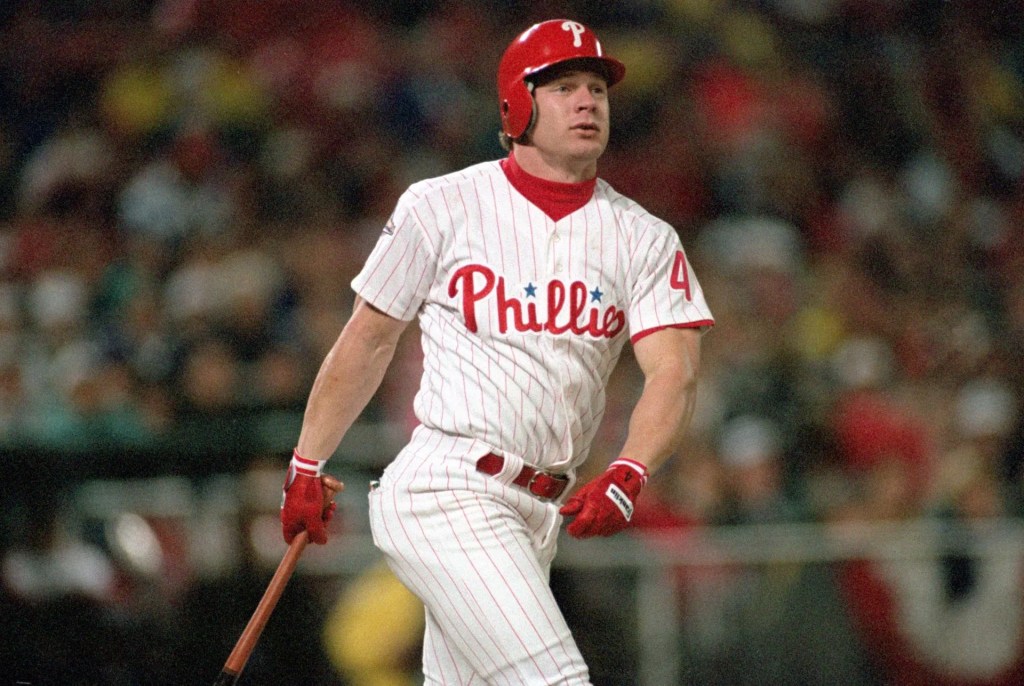
The Blue Jays, who were the defending champions, led the Phillies three games to two and were cruising through game six with a 5-1 lead going into the top of the seventh. It was then that “Little” Lenny Dykstra blasted a three-run home run of Dave Stewart to put the Phillies back in the game. They then pushed across two more runs and went ahead 6-5.
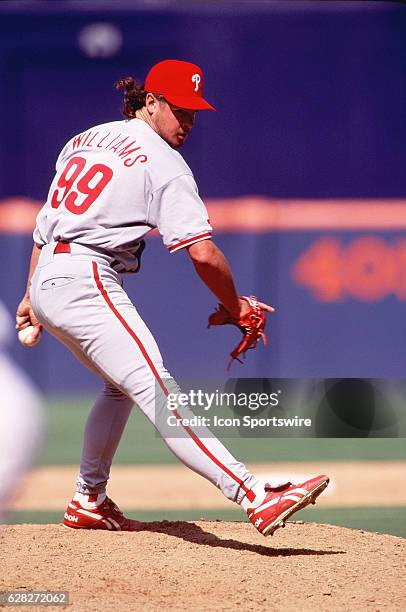
1993: Pitcher Mitch Williams of the Philadelphia Phillies in action during a Phillies game versus the San Diego Padres at Jack Murphy Stadium in San Diego, CA. (Photo by Icon Sportswire)
Toronto failed to score in the seventh and eighth and Philadelphia called on their fire balling closer Mitch “Wild Thing” Williams to pitch the ninth. Williams immediately got into trouble when by walking Ricky Henderson. After recording an out Williams faced the Series’ eventual MVP Paul Molitor who laced his 12th hit of the Series.
“Big Joe” Carter
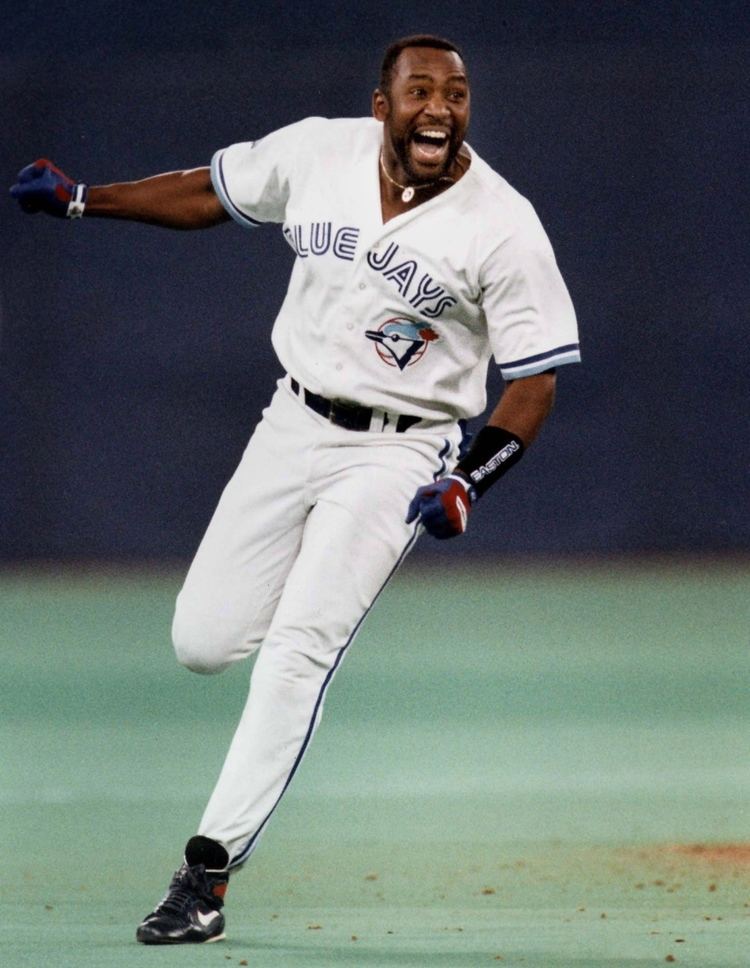
That brought up “Big Joe” Carter Toronto’s leftfielder and best slugger. During the regular season Carter led the Blue Jays with 33 home runs and 121 RBI’s. “Big Joe” got the best of the “Wild Thing” and lashed a line drive over the left field wall for a three-run, game-winning, World Series-winning home run. It was then, and still is, only the second time in World Series history that the Series ended with a walk-off home run. That time occurred in 1960 when Bill Mazeroski of the Pirates homered in the bottom of the ninth in game seven to beat the Yankees.
Let’s see what drama unfolds in the 2025 World Series and if Grandpa Gordy needs to add to his greatest World Series games.
Reference: Grandpa Gordy’s Greatest World Series Games, by Steven A. Falco 2002
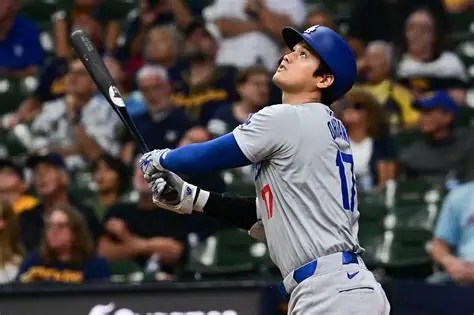
As the 2025 World Series gets ready to begin this Friday, I would like to reflect on Shohei Ohtani’s incredible performance for the L.A. Dodgers in the pennant-clinching game on Friday night.
Quite simply it was the greatest performance by a single player ever in an MLB game. Period.
You can look it up.
The only other pitcher ever to hit three home runs in a game he was pitching occurred in May 1942. The pitcher was Jim Tobin of the Boston Red Sox. He pitched nine innings, allowed three runs and was credited with the win. He did not strike out a batter. It was a fabulous performance, but it occurred in a meaningless game in May during a time when baseball’s talent pool was being diluted by World War II.
Ohtani only pitched six innings, but they were scoreless innings in which he struck out a whopping ten Brewers. Ohtani was also perfect at the plate, 3 home runs and one base on balls. And Ohtani’s performance came in a crucial pennant-clinching game. There have been many brilliantly pitched games in crucial games but never by a pitcher who hit three home runs.
Ohtani is also the only player ever to hit three home runs in a pennant-clinching game or playoff-clinching game. As for the World Series, Babe Ruth did it twice, in game four 1926 and game four 1928. “Mr. October” Reggie Jackson performed his dramatic feat in game six 1977. But Ruth and Jackson’s historic slugging was accomplished while leisurely patrolling the pastoral confines of right field.
For Ohtani it was quite a show that along with millions of baseball fans I was thrilled to watch.
Orion Kerkering’s horrendous blunder in the final game of the Dodgers/Phillies National League Division Series was one of the worst baseball plays I have ever seen. I really feel bad for the guy, and it was a tough night for Phillies’ fans. My guest blogger Bruce Solomon put it all in perspective.
I spotted this headline in the NY Post after the game last week:
That led me to consider that Richard Orion Kerkering could find notoriety, if not infamy for the ages amongst baseball aficionados for season-ending miscues placed squarely, if unfairly, on one player’s shoulders, as in Merkle’s Boner in 1908 and Snodgrass’ $30,000 Muff in 1912.
To provide some historical heft for Bonehead Orion’s Star-Crossed Muff, here are the tales of Merkle’s Boner and Snodgrass’ Muff:
After watching the play, I suggested to wife that the most charitable thing Phillies’ management could do would be to trade Orion to a galaxy far, far away from the enduring wrath of the baseball fans of the City of Brotherly Love.
As balm for the pain of Orion’s moment of ignominy, I share a taste of what cracker jack sports writing was like in the bygone days of 1912 with this recounting of the eighth and final game of the 1912 World Series by one of the finest scribes of the day, Hugh Fullerton:
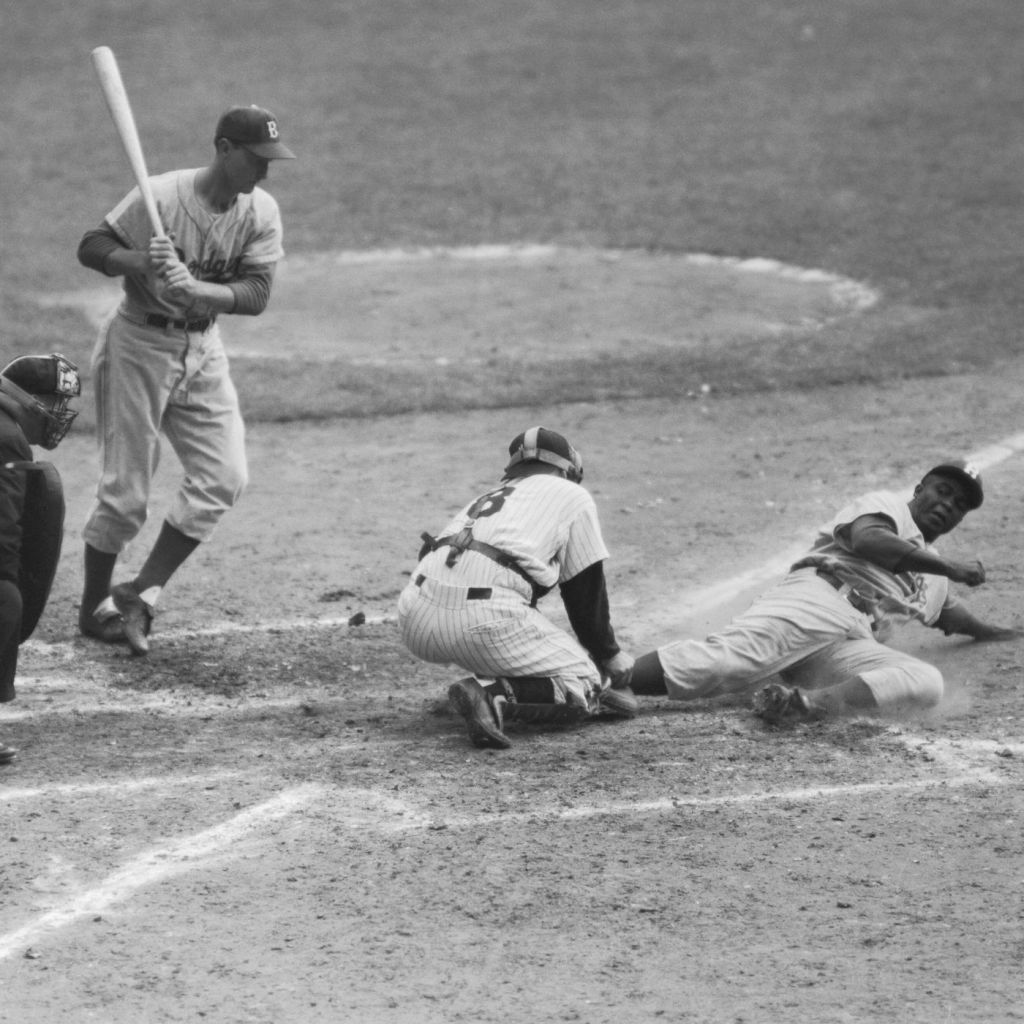
It was 69 years ago today that Jackie Robinson stole home for the Brooklyn Dodgers against the New York Yankees in game one of the 1955 World Series. It is a play that is this talked about and argued about to this day. And it is one of the moments in baseball history that explains Why We Love Baseball as told by Joe Posnanski in his great book of the same name. I’ll set the stage here and then let Posnanski take over with an excerpt from his fabulous book. Most baseball fans are familiar with the accounts of the event but read to the end to see and feel the true poignancy of the moment.
Jackie Robinson was on third base in the eighth inning of game one. There was one out and the Dodgers were down by two runs. The Dodgers had never beaten the Yankees in a World Series having lost 5 previous times. Whitey Ford was on the mound for New York and of course Yogi Berra was behind the plate. Robinson took off for home and as he slid into home Berra applied the tag. Umpire Bill Summers called Robinson safe. Berra did not agree. There is a huge picture of this moment in the Yogi Berra Museum in Montclair, New Jersey. According to Posnanski and Yogi’s family whenever Berra passes the photo, no matter what he is talking about, he points to the photo and declares “safe”.
According to Posnanski there are three reasons why people still talk about this play. First, it involved two of the games’ most iconic players, Robinson and Berra. Second, it involved one of baseball’s greatest rivalries, the Dodgers and the Yankees. Third, we still don’t know whether Robinson was safe or out.
I’ll let Posnanski take over from here.
Oh,you might think you know whether Robinson was safe or out. Lots of people think they know. Robinson was on third, a nice-sized lead and he was watching Ford closely. He then took small hops and took off for the plate while Ford was in his windup. Ford’s pitch beat him there, Yogi caught it with his left foot on home plate, he reached down with both his glove and right hand and tried to tag Robinson’s right foot just before it touched home.
Out? Safe? Home plate umpire Bill Summers did not hesitate. He ruled safe. Berra was sure he’d blown the call, so sure that he stood up and tore off his mask and began screaming at Summers like he never had at an umpire and never would again. Summers just kept stretching his arms, again and again, a repeat of his safe call, and then turned his back on Berra.
People have been arguing ever since.
There is one surviving film of the play. The replay shows everything… and nothing at all. It is a Rorschach replay. You will see in it exactly what you want. If you want to see Robinson out, he’s out. If you want to see him safe, he’s safe.
“It was bush stuff,” Berra shouted to reporters after the game. “It was showboat strategy, stealing home when you’re two runs behind like that. It was a bad play.”
Reporters raced over to Robinson for a response.
“The only thing bush about it,” Robinson replied, “was Berra’s tag.
Reporters raced back to Berra for his response to the response.
“He was out,” Berra said. “The call was blown. It was the wrong play, and he was out.”
Back to Robinson.
“Tell him to worry about himself,” Robinson said. “He didn’t tag me until after I crossed.”
Back and forth. The Yankees, as you know, won the game. But the Dodgers ended up winning that World Series—they finally beat the Yankees—and Jackie Robinson’s stolen base became a symbol of that victory.
And here’s the best part of the story. I’ll let Posnanski continue.
Jackie Robinson died in 1972. And for the next 40-plus years, Yogi Berra would often find himself at a banquet or celebration or gathering with Jackie’s widow Rachel Robinson.
They always greeted each other the same way.
“Safe,” Rachel would say.
“Out,” Yogi would say.
And then the two would laugh and hug.
References: Why We Love Baseball A History in 50 Moments by Joe Posnanski
The Baseball Almanac
Yogi Berra Museum & Learning Center 8 Yogi Berra Drive Little Falls, NJ
As we celebrate our nation’s Independence Day those of us who are endeared to baseball, our national pastime, also know that this date has another profound significance. It was 85 years ago this day that Lou Gehrig, the Hall-of -Fame first baseman, gave his farewell speech at Yankee Stadium sadly ending his stellar 17-year career. It is beyond my ability to describe the poignancy of Gehrig’s words so I will leave that to one of my favorite poets, Ed Romond and his wonderful poem:
Lou Gehrig DayYankee Stadium, July 4, 1939
He was scared and did not want to speak to 62,000 people.
Maybe he felt facing death was enough to endure but
they kept calling his name till he stepped up to the mic
and gave 278 words of thank you and goodbye. His body trembled
as he spoke with the voice of a dying man still strong enough
to unlock his heart before thousands and let them all come in.
The poem was dedicated to BJ Ward.You can find this poem and many other excellent poems in:
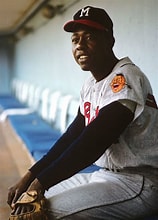
It was fifty years ago today that Hammerin’ Hank Aaron hit his 715th home run surpassing Babe Ruth’s long-standing record for lifetime home runs. On that cool early April afternoon in 1974 in Atlanta Stadium Aaron blasted a deep fly ball over the left-field wall against LA Dodger lefty Al Downing and became Major League Baseball’s all-time home run king.
I remember watching the momentous event with a small group of my college buddies. Yes, we cut classes to watch it. We had our priorities in order, although we were thankful that Hank came through that day saving us any further conflicts with our priorities.
Growing up a Yankee fan in the northeast in the 50’s, 60’s and 70’s I didn’t get to see Aaron on a regular basis. But I’ll never forget attending a mid-60’s game at Shea Stadium, Mets against the Braves. We had great seats in the loge section courtesy of the corporate perks of my buddy’s father. I distinctly remember being in awe of Aaron. He had an almost regal presence as he slowly ambled up to the plate. He had an unusual habit of carrying his helmet to home plate and then slowly donning it over his cloth hat as he settled into the batter’s box. He would then take one or two practice swings flexing his powerful wrists. Aaron was known for his powerful wrists. (As kids and wannabe ball players we actually did Hank Aaron inspired exercises to strengthen our wrists.) Then with a flick of those wrists Aaron treated us with a long home run. One of his 755 lifetime home runs. Most of us at that time thought it would be Mickey Mantle or Willie Mays who would pass the legendary Babe. But looking back on it, if my college self could tell my teenage self, “Hey, Hammerin’ Hank just passed the Babe,” my teenage self would have said, “Wow! Hey, I knew he could do it!”
Hank Aaron’s 23-year Major League Baseball career spanned three decades playing for only two cities, Milwaukee, and Atlanta and only two teams the Braves for 21 years and his final two years in 1975-76 with the Milwaukee Brewers.
He is the all-time leader in RBI’s, extra base hits, and total bases. He is second in lifetime home runs to Barry Bonds and second in at bats to Pete Rose. During his Hall of Fame career, he led the National League in home runs four times, RBI’s four times and batting average twice.
In 1957 he won the National League MVP award while leading the Braves to a World Championship over the New York Yankees.
Hank Aaron passed away in 2021 at the age of 86.
Many regard Aaron as the best professional baseball player of all time.
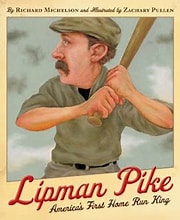
Few realized that baseball history would be made on July 16, 1866, a sweltering, humid afternoon, when the Philadelphia Athletics took the field against the Alerts of Danville at their new ball grounds in the City of Brotherly Love. Just a year earlier, the field served as a bivouac and staging area for the Union Army in the waning days of the Civil War. Up to the plate stepped 21-year-old Brooklyn native Lipman Pike, the son of Jewish refugees from Holland and the fastest, strongest player on the Athletics squad. Pike clouted the first pitch he saw deep to the gap in center field, using his tremendous speed for an inside-the-park home run. In each of his next four at-bats, Lip deposited the ball over the right field fence onto Columbia Avenue. Standing only 5’ 8” and 158 pounds, Lipman Pike was a veritable David amongst Goliaths, hitting five home runs in five consecutive at-bats in one game – a feat that hasn’t been matched in 158 years.
A local newspaper published that Pike, and two other players were paid $20 per week under the table by the Athletics, violating the amateur status of the “gentlemen’s sport”. Pike was ordered to appear before the governing committee of the National Association of Base Ball Players. The matter was dropped when no one from the Association bothered to show up for the hearing. As a result, Lipman Pike is considered one of the first professional athletes in America. Lipman Pike went on to a storied career as professional baseball’s first slugger, first Jewish player and manager, and the first American Jew to gain national fame as a sports icon. Tales of his feats became the stuff of legend. 1871 was the first year of the first professional baseball league, the National Association. Lipman Pike signed to play with the Troy Haymakers, who named him their captain and field manager – the first and only Jewish manager in baseball for the next 71 years. Pike led the National Association in home runs in 1871, 1872 and 1873, hitting 17.2 percent of the home runs swatted in the league in 1872, a record not broken until Babe Ruth in 1920. He holds the all-time career records for home runs and extra base hits in the National Association and won the home run crown in the National League in 1877, its second year of existence.
This newspaper photo from 1866 features the Brooklyn Atlantics and the Philadelphia Athletics of the National Association of Base Ball Players. Pike is one of the mustachioed players though I’m not sure which one.
Pike was one of the fastest men in baseball. He would race any challenger for a cash prize and a side bet. In 1873, Pike raced against a trotting horse named Clarence in a 100-yard sprint at Baltimore’s Newington Park and won by 4 yards in a time of 10 seconds flat, earning $250 (worth about $6100 today). While playing a game at Lakefront Park in Chicago in 1878, Lip Pike hit the longest double in major league history. Pike’s blast not only cleared the fence, but also a freight shed and half a dozen railroad cars, landing in a freight car traveling east. The Cincinnati Enquirer estimated the ball flew 600 feet, but legend has it that it traveled another 482 miles by rail. Due to the ground rules at Lakefront Park, Pike was only credited with a double. A few years later in Albany, Pike hit a ball over the wall at Riverside Park into the river. Right fielder Lou Knight began to go after the ball in a boat, but finally gave up. This time, in spite of the ground rule, Pike was credited with a home run.
His baseball career over, Lipman Pike became a successful haberdasher in Brooklyn, where he was beloved and celebrated by the Jewish community. Lip’s haberdashery became a successful business and a meeting place for the local baseball cognoscenti. There was an outpouring of grief after his death from heart disease in 1893 at the age of 48. The Sporting News wrote: “Pike . . . was one of the few sons of Israel who ever drifted to the business of ball playing. Called out by Umpire Death . . . Lip Pike was one of the greatest sluggers who ever batted.”
In the inaugural election for the Baseball Hall of Fame in 1936, Lipman Pike received one vote. He may not have a plaque in Cooperstown, but never fear. Lipman Pike, this pioneer who held many of early baseball’s firsts, who as a young man lived up to the nickname bestowed upon him, “The Iron Batter”, became professional baseball’s first legitimate slugger. He was a 19th century ballplayer whose prowess on the ballfields reflected the pride and hope felt by America’s most recent immigrant influx, Jewish people. In 1985, one hundred nineteen years after he hit 5 home runs in 5 consecutive at-bats in a game; ninety-two years after he succumbed to heart failure, Lipman Pike was decisively elected to a place of honor on the bimah of the Jewish Sports Hall of Fame in Netanya, Israel. You know how to get to the Jewish Sports Hall of Fame? Start out in Cooperstown and when you can’t find a Lipman Pike plaque, take a hard right and travel 6,000 miles straight to Netanya.
(As the dreary days of winter drag on and Opening Day still seems so far away, I have found one antidote for these doldrums is to check out Gary Livacari’s excellent blog Baseball History Comes Alive. While doing so I came upon Gary’s fine retelling of this timeless baseball tale. I hope you enjoy it as much as I did.)
“I’ll knock a homer for Wednesday’s game. Babe Ruth” –Inscription on baseball scrawled by Babe Ruth during the 1926 World Series and given to little Johnny Sylvester, recovering from a near-fatal illness.
One of baseball’s most enduring legends occurred during the 1926 World Series. Of course it had to involve none other than the great Bambino himself. We’re all aware the Babe had his share of personal shortcomings (and don’t we all!); but when there was a kid in need, no one was more likely to come through in a big way than the Babe.
The Babe’s Famous Promise
The ball signed by Babe Ruth with his promise to Johnny Sylvester to hit a home run for him.
In 1926, little Yankee fan Johnny Sylvester was just 11 years old, recuperating from a horseback riding accident that resulted in a serious injury. He was hospitalized near his home in Essex Falls, New Jersey. The prognosis wasn’t good. The Yankees got wind of Johnny’s condition, and so during a rain delay in Game Three of the World Series in St. Louis, a few ball players signed a baseball just for Johnny. Babe Ruth inscribed more than just his signature, though. He penned his famous promise:
“I’ll knock a homer for you in Wednesday’s game” Babe Ruth
Babe visits the ailing Johnny Sylvester in the hospital.
In the classic photo above, we see the Babe and little Johnny together. Johnny still has a bandage on his forehead from his horseback riding injury. Thanks again to Don Stokes for another super colorization which really helps bring the story to life.
The Bambino Delivers…
On Wednesday, October 6, 1926 – Game Four of the series, a 10-5 Yankee victory – the Babe delivered on his promise…and then some! Amazingly, he didn’t hit just one homer, he hit three. On the day after Game Seven, Oct. 11, Ruth personally visited Johnny Sylvester in the hospital in Essex Falls.
…And Johnny Miraculously Recovers!
And sure enough, something miraculous happened: Against all odds, Johnny’s health gradually started to improve. According to Andrew Lilley, Johnny’s great-nephew, the visit from the Babe changed everything:
“Babe Ruth’s home runs and his visit helped Johnny find the will to survive.”
On Dec. 16, 1926, Ruth penned another letter to the boy (shown at right, in Babe’s distinctive, florid handwriting), inquiring about his recovery and inviting him to Yankee Stadium during the 1927 season “to help win another pennant.”
Johnny didn’t just survive…he thrived. He went on to graduate from Yale University in 1937, and later became a successful business owner and much-beloved family man. He even served in the Navy during World War II, rising to the rank of lieutenant. All because the Babe saved his life…or so the story goes!
Life Turns Full Circle!
In 1947, Johnny Sylvester visits an ailing Babe Ruth.
Fast forward to 1947. The situation had now completely reversed. Now it was Babe Ruth who was ailing and it was Johnny Sylvester’s turn to repay the man who had come to his bedside when he was gravely ill. As Andrew Lilley described the scene:
“The story had come full circle at this point. Here was the kid all grown up going back to the Babe and showing the same generosity to his hero, just as the Babe showed him all those years ago.”
Reading about this reunion 75 years later, it’s still hard not to shed a tear…
Ruth wasn’t the only sports celebrity to reach out to the ailing boy. “Big Bill” Tilden, one of the greatest tennis players of all time, sent him an autographed tennis racquet. Hall-of-Fame halfback Red Grange sent a letter and an autographed football. Baseball Hall-of-Famer Rogers Hornsby, in a rare show of compassion, was another famous athlete who sent little Johnny a letter. Of course, none of these other displays of concern did as much for little Johnny’s recovery as the Babe’s fulfilled promise and later visit.
Forty Years Later, Johnny Sylvester Is Found!
Johnny Sylvester at the time of his graduation from Yale in 1939
In 1986 – the 40th Anniversary of the Johnny Sylvester story – the Babe Ruth Museum tried to investigate the story for authenticity. The museum eventually tracked down the real Johnny Sylvester, finding him as a retired banker living in Connecticut. When asked for some proof that these events actually happened, Mr. Sylvester produced the baseball with Babe’s handwriting and signature. The ball said, “I’ll knock a homer for Wednesday’s game. Babe Ruth.” The ball is now on display in the Babe Ruth Museum in Baltimore along with the other artifacts in “The Little Johnny Sylvester Collection.” It’s been on loan to the Babe Ruth Museum for 36 years.
The Babe Ruth Museum located Johnny Sylvester in 1986.
But Is the Story True?
Is this heartwarming story completely true, or has it been embellished? Was the whole thing a hoax? Maybe we’re falling for a sappy publicity stunt dreamt up by Babe Ruth’s ubiquitous agent and “image-maker,” Christy Walsh. It certainly has that ring to it.
If so, it was highly successful. The publicity was priceless for Babe Ruth’s image. Years later when asked about the incident, Ruth is purported to have blurted out, “Who the hell is Johnny Sylvester?”
True or not, it remains one of the most timeless anecdotes in all of baseball lore and is one of the wonderful stories contributing to the endearing legacy of the great Bambino, Babe Ruth. Sadly,Johnny Sylvester passed away on January 6, 1990 at age 74 while residing in Garden City, New York.
Gary Livacari
Subscribe to our website, “Baseball History Comes Alive!” with over 1200 fully categorized baseball essays and photo galleries, now closing in on the one million hits mark with 899K hits and over 700 subscribers: www.baseballhistorycomesalive.com










 Back Home With Baseball and Beyond
