By guest blogger, baseball historian and author Gary Livacari
“If there was ever a man born to be a hitter it was me…A man has to have goals – for a day, for a lifetime – and that was mine, to have people say, ‘There goes Ted Williams, the greatest hitter who ever lived’” –Ted Williams
The above quote from Ted Williams may sound a bit cocky, but as Dizzy Dean once said, “It ain’t braggin’ if you can do it”, and, as we all know, there was never any doubt that Ted Williams could “do it.”
Seventy years ago this month January 1952, marks the anniversary of an important day in the life of Ted Williams. The Red Sox’s great outfielder was notified he would be activated for military service during the Korean War. The actual recall came on May 1, 1952, after he appeared in only six games. Ted had already missed three full years due to service in World War II. In the months ahead, Ted Williams would be tasked with flying 39 combat missions in his F9F Grumman Panther and would survive a crash-landing after being shot down.
On many of his missions, Ted would serve as wingman for former astronaut and senator, John Glenn, who described Ted as one of the best pilots he knew. He didn’t return to the Red Sox until late in the 1953 season and appeared in only 37 games. Altogether, Ted lost approximately 4.75 years to military service, of which at least three can be considered prime years.
Photo Credits: All from Google search
Information: Excerpts edited from Ted Williams Wikipedia page; stats from Baseball-Reference
Here’s a review I received this month written by Shey Saints and now published on her website, Shey Saints’ Book Reviews
“I enjoyed reading this book! And to think, I’m not American, nor a baseball fan! Nevertheless, I recognize the historical references, and the smooth flow of narrative allowed me to visualize the situations in 1968. It’s been a long while since I read a light and fun book! It was so entertaining, and at the same time, it taught me new things which were mainly about baseball, and refreshed me with some historical events, and even the parts of the cell!
This book brought back my younger days. Those times when you do silly things to make a boring biology class enjoyable, or that time when you experience your first non-adult-supervised trip with your friends. But what I love the most about this book is its casual tone. It suits the setting and coming-of-age genre, as the story is told through TJ’s eyes. The distinct personalities between TJ, Jonathan, as well as Phil, and Frankie, were manifested with such great characterization.
Overall, I’m giving this book 5 out of 5 stars. It’s a great story about baseball, friendship, family, different beliefs, and racial conflicts. I highly recommend this to all readers who love coming-of-age stories, regardless if you’re a baseball fan, or not.”
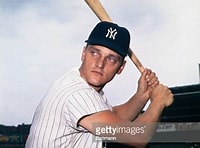
Earlier this month many of us were once again disappointed that Roger Maris failed to make it into the Hall of Fame. But we understand. Maris did not have the lifetime stats to qualify. He had a fine career and several great seasons, but his injury shortened years as a pro just didn’t approach Hall of Fame standards. We can however reflect on his achievements and take a closer look at how much he meant to the success of those Yankee teams in the early 1960’s.
As a two-time American League MVP Maris led the league in RBI’s twice, home runs, runs, total bases and slugging once. His record-breaking 61 home runs in 1961 surpassed Babe Ruth’s mark of 60 that lasted 34 years and Maris’s 61 stood for another 37 years until it was broken by Mark McGwire in 1998 during the steroid era. But what is often over-looked is what Maris meant to the New York Yankees. Only twice in major league history has a team won five consecutive pennants like the Yankees did from 1960 to 1964 and the most significant catalyst to that achievement was Roger Maris who was acquired by the Yankees from a trade with Kansas City in December of 1959.
The Yankees had dominated much of the 1950’s but they stumbled badly in 1959 finishing third behind Chicago and Cleveland. They had an aging right fielder, Hank Bauer, and an aging catcher, Yogi Berra. Their star slugger, Mickey Mantle, had a such disappointing year (for him, only 31 homers and 75 RBIs) that he began to hear the Bronx boo-birds. When the season ended there was no reason to expect that the once mighty Yankees could re-immerge and challenge the go-go White Sox with Nellie Fox and Luis Aparicio, and the powerful Indians with Rocky Colavito and Minnie Minoso. But there was hope for the Yankees upon the arrival of the young outfielder from the mid-west who swung a powerful left-handed bat that would prove perfect for the short porch in Yankee Stadium’s right field.
Roger Maris did not disappoint. In his first game as a Yankee in April 1960 he hit two home runs with 4 RBIs in a Yankee victory over the Red Sox. He went on to have an MVP season leading the league in RBIs and slugging percentage as the Yankees won the pennant. No longer the sole slugger on the team, Mantle benefited greatly from Maris’s presence in the lineup and rebounded with a fine campaign, leading the league in home runs and runs scored and finishing a close second to his teammate in the MVP voting.
In 1961 Maris not only had a stellar MVP season but this time it was record-breaking, as he bested Ruth’s magical home run mark with his 61st home run on the last game of the season. An event I will never forget because I was at the game. (How lucky we were that my dad was a procrastinator and waited for the very last game for our yearly trek to the Stadium.) Maris led the league in RBIs with 142 and tied with Mantle for the league lead in runs scored at 132. The Yankees of course went on to beat the Cincinnati Reds in the Worlds Series. But Roger’s contributions to the success of his team did not end with these two remarkable campaigns. Maris again had a solid year in 1962 leading the Yankees in home runs and RBIs as the Bombers repeated as World Champions defeating the San Francisco Giants in seven games. And it was Roger’s tremendous game-saving defensive play in the bottom of the ninth of that seventh game that prevented the tying run from scoring in New York’s 1-0 victory.
Maris missed roughly half of the 1963 season with injuries, but he still managed to hit 23 home runs and helped his team to their fourth consecutive pennant. He staged a commendable comeback in 1964 batting .281 with 26 homers and 71 RBIs as the Yankees won their fifth consecutive American League pennant. Five seasons with New York, five pennants. Maris was truly a difference maker for New York.
As injuries plagued number 9 and his production faded so did the fortunes of the Yankees as they slipped to sixth in 1965 and dead last in 1966. The next year Maris was traded to the Cardinals.
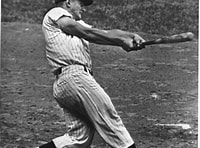
The important thing to remember here is not so much his tremendous hitting, he averaged 36 home runs and 96 RBIs over that five-year span, but his ever presence in the heart of the Yankee lineup. Maris batted in the third or fourth slot nearly 90% of the time. Number 9 was a fixture in Yankeeland those years. Perhaps an all too underappreciated fixture. Yet growing up a baseball fan in those days many of us would try to bat lefty and emulate Roger. Loosen our shoulders with a Maris-like shrug. Then two choppy practice swings and finally that compact, elegant, and always powerful swing. Roger Maris, the slugging sparkplug for the New York Yankees, and always a “Hall of Famer” to his legion of fans.
References:
The Baseball Encyclopedia, Baseball Reference.com, The Baseball Almanac,
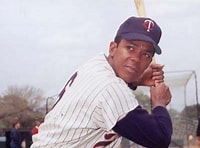
Tony Oliva, the star right fielder for the Minnesota Twins in the 1960’s and 1970’s, has finally made it into the Hall of Fame. Earlier today the professional baseball’s Golden Days Era Committee voted to induct Tony Oliva into the Hall of Fame 45 years after his retirement in 1976. Congratulations Tony!
There will always be debates about who deserves such an honor. Baseball’s Hall of Fame has always been a respected and cherished institution with super high standards based on drawn out analyses of complex data. Every baseball fan may have a different opinion, but it is hard not to be a fan of the dynamic Cuban phenom who burst on to the scene with a sensational season in 1964. There is no longer a need to debate whether Tony O should be in the Hall. After all there is only one player ever (Bill Madlock) to be denied entry with three or more batting titles. So, for the fans let’s just take a moment to appreciate the accomplishments of the slender slugger form Pinar del Rio Cuba.
After two cups of coffee in ’62 and ’63 playing in 16 games for the Twins and batting .438, Oliva had his breakout season as a rookie in 1964. That year he led the league in batting at .323, and he led in hits, doubles, runs, and total bases. He was named to the All-Star team, an honor he would receive seven additional times. And he was named Rookie of the Year, the first time a ROY would also claim the batting title. He was also the first black player to win a batting title in the American League. The junior circuit had been slow in signing black players, so much so, that by 1964 the National League already had six different black players winning the title.
Oliva was so good that he came right back and won the batting title in 1965 at .321, again topping the league in hits while leading the Minnesota franchise to their first World Series ever and the first since 1933 for their heritage team the Washington Senators. He continued his torrid hitting in 1966, leading the league in hits but coming in second in batting average to the great Frank Robinson. Oliva remained a consistent hitting star finishing third in batting in 1968, 1969 and then had a tremendous 1971 campaign leading the league batting an impressive .337 while also leading in slugging percentage. Tony O twice finished second in MVP balloting losing to teammate Zoilo Versalles in 1965 and Baltimore’s Boog Powell in 1971.
For most of his career the lanky lefty batted third in front of Hall-of-Famer Harmon Killebrew as the Twins battled each year for the pennant. Although the Twins never won a championship, they clashed with the mighty L. A. Dodgers led by Sandy Koufax and Don Drysdale in the 1965 World Series, ultimately losing in seven games. Minnesota made it to the ALCS twice in 1969 and 1970 but both times losing to the Orioles despite Oliva’s hot hitting. He batted .385 and .500 in the those two ALCS.
Those of us who got to watch Tony Oliva could not help but be impressed by his tremendous abilities and love for the game. Oliva could not only hit he was a solid fielder, twice leading the league’s right fielders in assists and four times in put outs. But it was his approach at the plate the endeared me. When we were kids, I loved to imitate his batting style. He had a spread-out slightly closed stance and was known to be a free swinger who occasionally lost hold of his bat while swinging, causing his first base coach to run for cover. And for such a slugger— he had 220 career home runs—he was very difficult to strike out. And for that matter he was also difficult to walk. As they like to say today, he “put the ball in play” cutting and slashing and many times swinging at pitches out of the strike zone. He hit to all fields and there would never be any over-shifting on Oliva.
Congratulations to the great Tony Oliva. Your time has come. You are a Hall of Famer. And thanks for the memories.
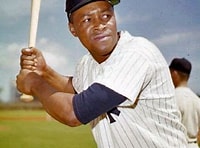
As we think back sixty years ago to that memorable 1961 baseball season what first comes to mind is the dramatic race to break Babe Ruth’s single-season home run record. Many of us remember how Yankee sluggers Mickey Mantle and Roger Maris battled neck and neck to overcome Ruth’s mark of 60 home runs which had seemed insurmountable over the previous 34 years. If you are old enough you might even recall the primitive TV graphics posting the home run number on the television screen after each blast by the M&M boys. But what most fans don’t recall is the other dramatic and potentially historic batting competition that occurred in 1961 which was the race for the American League batting title between Detroit Tiger first baseman Norm Cash and New York Yankee catcher Elston Howard. If Howard could prevail it would be the first batting title ever for a black player in the American League.
Ellie Howard was the first black ballplayer signed by the Yankees and began his career with the club in 1955. He had several solid seasons but had his breakout season in 1961 while Mantle and Maris were grabbing all the headlines chasing Ruth. Howard got off to a torrid start leading the league with a .391 batting average at the end of May and continued to lead the league at the All-Star break with a stellar .369 average. Ellie had spent much of his big-league career as a versatile player splitting time in the outfield and behind the plate. He even played some first base. But when Ralph Houk took over the managerial reins after the firing of Casey Stengel, Houk was determined to use Howard exclusively behind the plate. Yankee legendary catcher Yogi Berra had become worn down catching for more than a decade and agreed to settle into the greener pastures of leftfield to ease the strain on his knees. Howard took full advantage of the opportunity and became the regular Yankee catcher performing brilliantly for the next four years until injuries limited his production.
It was a hot pennant campaign in 1961, and the Yankees battled the Tigers for much of the season as Cash and Howard competed for the batting title. But by late summer the Yankees had a 12-game winning streak during which Ellie was a red-hot 21-for-44 batting .477 and the Yanks pulled ahead and never looked back. At that point Howard still led the league with a .365 batting average though Cash was close behind at .360. As the Yankees coasted to the pennant Howard had his first slump going 1-for-18 in his last at bats of the season. Cash on the other hand remained consistent and won the title with at .361. Howard finished at .348. Throughout the entire 1961 season Howard’s batting average never dipped below .333. And despite his torrid hitting Howard mostly batted in the 6th or 7th position in the stacked Yankee batting order which somewhat diminished his run production that still amounted to a respectable 64 runs scored and 77 RBI’s by the season’s end.
Although Howard’s achievements may have been overlooked in 1961 his career accomplishments can never be. Ellie appeared in ten World Series (one with Boston) and was an integral part of four World Championships with New York. He was the first black Most Valuable Player in the American League and the first Black to be hired as coach in the AL. Incidentally it was not until 1964 that a black ballplayer won the American League batting title when Tony Oliva of the Minnesota Twins accomplished the feat as a rookie with a .323 average. Oliva would again win the AL batting title in 1965 and 1971.
As a footnote to that historic 1961 season Ellie Howard by the end of the season was 18 plate appearances short of what was required to qualify for the batting title. This was due primarily to the New York’s power-packed lineup and the sensational play of another under-appreciated Yankee, Johnny Blanchard who started 48 games behind the plate for the Yanks in 1961. Blanchard hit an incredible 21 home runs during his limited playing time averaging a home run almost every other game. Blanchard’s HR total matched Howard’s and together they combined for 42 home runs which is remarkable achievement for the catching position.
(Facts complied from the Baseball Almanac and Seasons of Glory.)
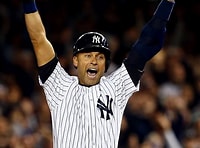
It was twenty years ago this morning when Derek Jeter stepped to the plate in the bottom of the tenth inning before a raucous but weary Yankee Stadium crowd in game four of the 2001 World Series against the upstart Arizona Diamondbacks. The D-backs held a two games to one lead and New York desperately wanted to avoid going down three games to one. The Yankees had avoided that fate in the bottom of the ninth when Tino Martinez belted a thrilling two-out, two-run homer to tie the game at 3-3. But as the clock struck midnight on this Halloween night the game’s outcome was far from certain.
As Jeter came to the plate it would be the first time that a World Series game was played in November. Derek glared out at Arizona’s star reliever Byung-Hyun Kim and then in typical Jeter fashion lashed an outside pitch to right field. The screaming liner easily cleared the right-field wall for a dramatic game-winning, walk-off home run tying the series at two games apiece.
For his heroics that night Jeter justly earned the moniker Mr. November, but his Hall-of-Fame career was full of other clutch hits and postseason records. While winning 5 World Series rings Jeter has played in a Major League record 158 postseason games. He also holds the postseason records for most plate appearances (734), most at-bats (650), most total bases (302), most hits (200), most singles (143), most runs scored (111), most doubles (32), and most triples (5). In addition, he has an impressive .321 lifetime World Series batting average in seven Fall Classics and is fourth all-time in World Series runs scored with 32 and fifth in hits with 50. He was the 2000 World Series MVP. And as might be expected Mr. November has a .300 lifetime batting average in his seven November World Series games. A true champion for any month.
On this date October 6, 69 years ago Mickey Mantle came to the plate against Brooklyn Dodger pitcher Billy Loes in the eighth inning of game 6 of the 1952 World Series. Brooklyn was ahead 3 games to 2 in the series but the Yanks held a precarious 2-1 lead in game 6. New York was amid a dominant streak having won the last three World Series and four out of the last five. They had the Dodgers’ number beating Brooklyn in their three previous meetings in, ‘41, ’47 and ’49. So Brooklyn was out for revenge. They needed to hold the hated Yankees at bay in the eighth and ninth so the powerful Brooklyn lineup could secure a victory and end the Yankee dominance.
As Mantle stepped to the plate, he was a twenty-year-old phenom who had taken over centerfield from the revered Joe DiMaggio who had retired at the end of 1951. This was Mickey’s second World Series. His first, the previous year, ended tragically in the fifth inning of game 2 when Willie Mays hit a fly to right centerfield. Mantle, who was playing right, charged over for the ball but pulled up when DiMaggio called him off. Mantle’s foot got caught in a drainage ditch and his knee buckled. He left the game and did not return for the rest of the series. It was the beginning of a string of leg injuries that would hamper the Mick’s career. All this was in the past as Mantle dug in from the left side and blasted a Loes pitch over the wall to give the Yanks a 3-1.
Mantle’s first World Series homer turned out to be the deciding run in game 6 as Dodger slugger Duke Snider homered in the bottom of the eighth. New York held on for a 3-2 win knotting the series at 3-3.
In game 7 the young Mickey Mantle once again had the deciding blow when he hit a solo shot in the top of the sixth against Joe Black giving the Yanks a 3-2 lead. New York held on to win 4-2 thanks to miraculous catch by Billy Martin on a short pop up by Jackie Robinson. It was the fourth World Championship in a row for the Bronx Bombers.
Mantle was the unquestioned hitting star of the series batting .345 with two homers, five runs scored, three RBI and a .655 slugging percentage.
I was only two months old at the time so I could only read about the Mick’s early exploits. But like so many others I would soon become a devoted Mickey Mantle fan and enjoyed watching his storied career which included 16 more World Series homers for record of 18 which still stands today.
Recently I was very fortunate to be interviewed by Tom Kranz on The Independent Author Podcast. We talked about my novel Mickey Mantle’s Last Home Run. Kirkus Reviews calls my book an “emotionally satisfying story of friendship and a well-written sports tale.” If you get a chance take a listen to the interview. I think you will enjoy it.
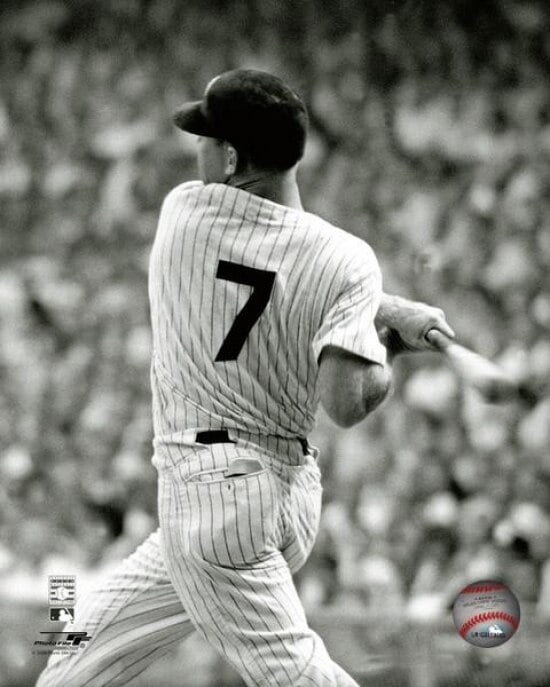
Fifty-three years ago today, September 20, 1968, was not a date of any particular notoriety considering it was a year full of searing historical markers. It was a warm day in the northeast but as evening approached there was a hint of autumn. The Yankees were home playing a meaningless game against the Red Sox. These were the lean years for the storied franchise which was playing out the season heading toward a disappointing fifth place finish. But when Mickey Mantle came up against Jim Lonborg early in the game, he did what he had done so many times before, 535 times before. He hit a home run. To us young Mantle fans this was no biggie. Another home run. Sure. Number 536. So many before, many more to come. But to the more seasoned fans it seemed like something different, and Mantle received a long heartfelt ovation from the sparse but dedicated Yankee fans in attendance. Did they know something I didn’t?
I was fifteen at the time and from my earliest memories always a baseball fan, always a Yankee fan and of course always a Mickey Mantle fan. There really wasn’t that much else that I cared about. That is what I grew up with. To say that I was lucky is a monumental understatement. As a baby-boomer growing up in the fifties my parents’ generation had overcome the grinding Depression, won a World War and like so many others they settled in the suburbs somehow carving out a comfortable life for their children. For me and so many others like me that meant a halcyon existence that consisted of baseball, the Yankees and of course The Mick. Endless hours playing baseball, watching baseball on TV, talking about baseball, scouring box scores, and there was a long string of American League and World Series Championships for the Yanks with Mantle the center of it all. A brilliant career. An infectious smile. A classic name.
But all this would end in 1968, whether we were aware of it or not, because of the other notorious dates in 1968. January 30, the Tet Offensive began in Vietnam and America’s indomitable place as leader of the free world would be severely challenged. So much so that to this day America still struggles with our foreign policy limitations. March 31, when President Lyndon Johnson told the country he would not seek reelection in order to attempt to heal a divided nation which remains divided to this day. April 4, the day the inspirational leader of the civil right movement, Martin Luther King Jr., was assassinated leaving unresolved so many issues of social justice which we still grapple with today. And June 6, the date we lost our young dynamic Presidential candidate, Bobby Kennedy, leaving us with Nixon. I was unaware of any of this on September 20, 1968, the date of Mickey Mantle’s Last Home Run. But the years ahead would be hard for me, my fellow Mantle fans and for our country. Very hard.
I will never forget this day 26 years ago when Mickey Mantle passed away. Growing up in New Jersey in the late fifties and early sixties Mantle was more than a star, more than an icon, he was a constant, like a force of nature binding together the scattered remnants of the big bang. If you were a kid who liked baseball Mantle was always there, the best slugger, the best smile, the best name, the best baseball player period. He was always there, and it seemed to never change. Summers were endless, playing ball was endless. I thought about all of this when Mantle passed away, but most of all I thought about how much he meant to my childhood. Mantle certainly had his flaws and late in life he tried to own up to them. Yet it still brought tears to my eyes as the hero of my youth would be left only to my memories.




 Back Home With Baseball and Beyond